Physical Address
304 North Cardinal St.
Dorchester Center, MA 02124
Physical Address
304 North Cardinal St.
Dorchester Center, MA 02124

Two summers ago we bought a house with a 16×32 in-ground pool, roughly 21,000 gallons, one skimmer, and a row of live oaks along the west fence that drop something onto the water every day from September through November. For two seasons I did the manual routine — telescoping pole, leaf rake, wall brush, and about 45 minutes every Saturday morning that I will never get back. I tried a cheap cordless pool vacuum in 2024. It ran 40 minutes, never climbed a wall, and its battery was dead by August.
So when I finally sat down to research a real robotic cleaner, I read everything I could find. That is where this Scuba S1 review begins — not with a press release, but with a shortlist of six units, a spreadsheet of runtimes and filter micron ratings, and a healthy distrust of the phrase “adaptive navigation.” I bought the Aiper Scuba S1 2026 with my own money and have now run it for six weeks. This is a post-purchase review after extended testing, not a first-impressions piece.
I also wrote a separate Aiper Scuba S3 review while I was at it, since that model was the other one on my shortlist. And if you want the bottom line before reading 3,000 words of my opinions, start here: Is Scuba S1 worth buying.
The 60-Second Answer
What it is: A battery-powered robotic pool cleaner that vacuums and brushes the floor, walls, waterline, and shallow areas of an in-ground or above-ground pool with no hose and no cord to the pump.
What it does well: The dual-layer filtration genuinely captures fine debris that my sand filter was cycling past, and the WavePath coverage pattern leaves fewer untouched strips of floor than my manual vacuuming ever did.
Where it falls short: Cycle time is a hard ceiling — it will not finish a heavily fouled 20,000-gallon pool in one pass, and it does not scrub waterline tile the way a brush in your hand does.
Price at review: 499.98USD
Verdict: Buy it if you have a mid-size pool, a debris problem you cannot outrun, and you accept that you will still run a second cycle after storms. Skip it if you have a large pool, deep algae issues, or stairs and sun ledges you expect it to conquer — it will not, and a corded cleaner or a higher-tier model is a better fit.
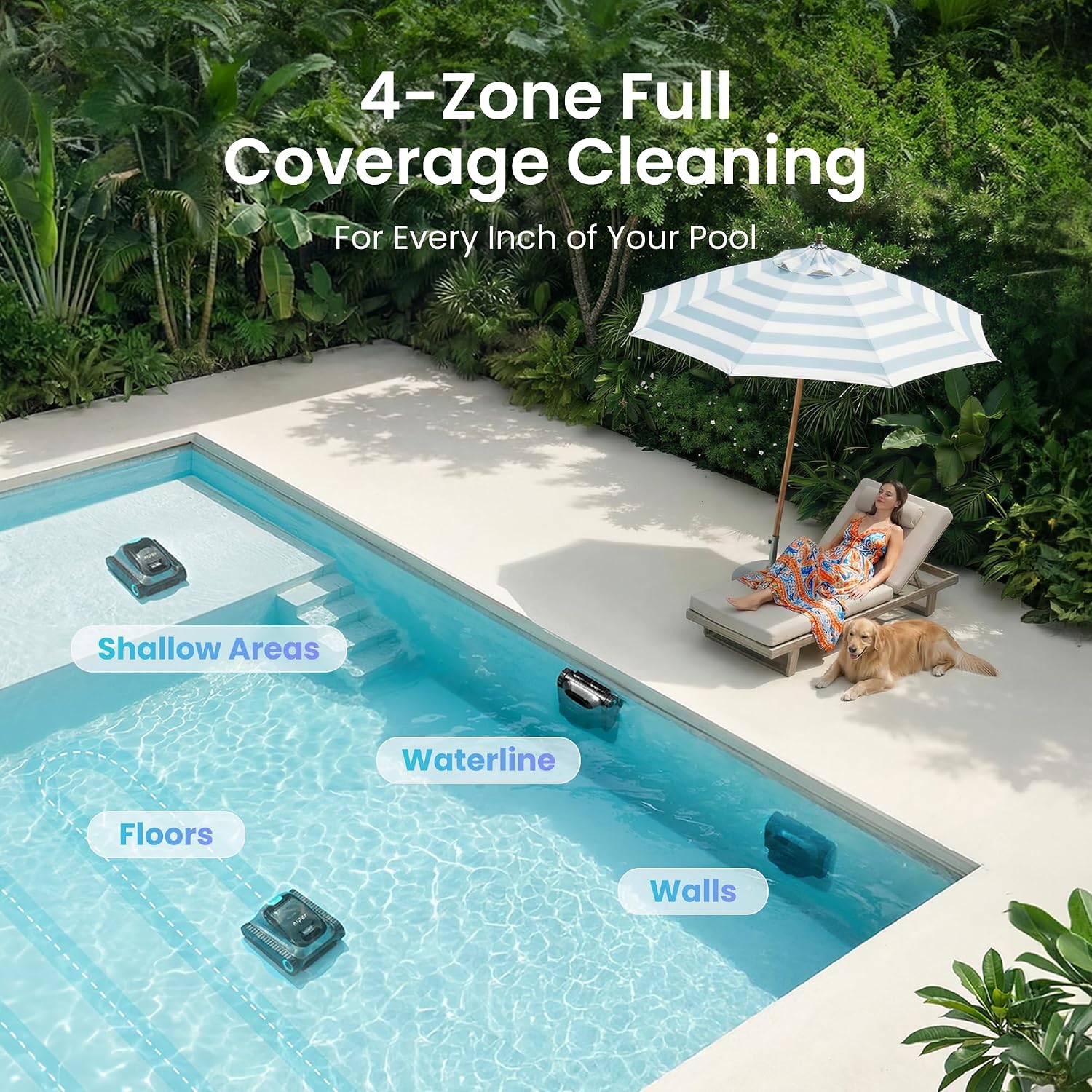
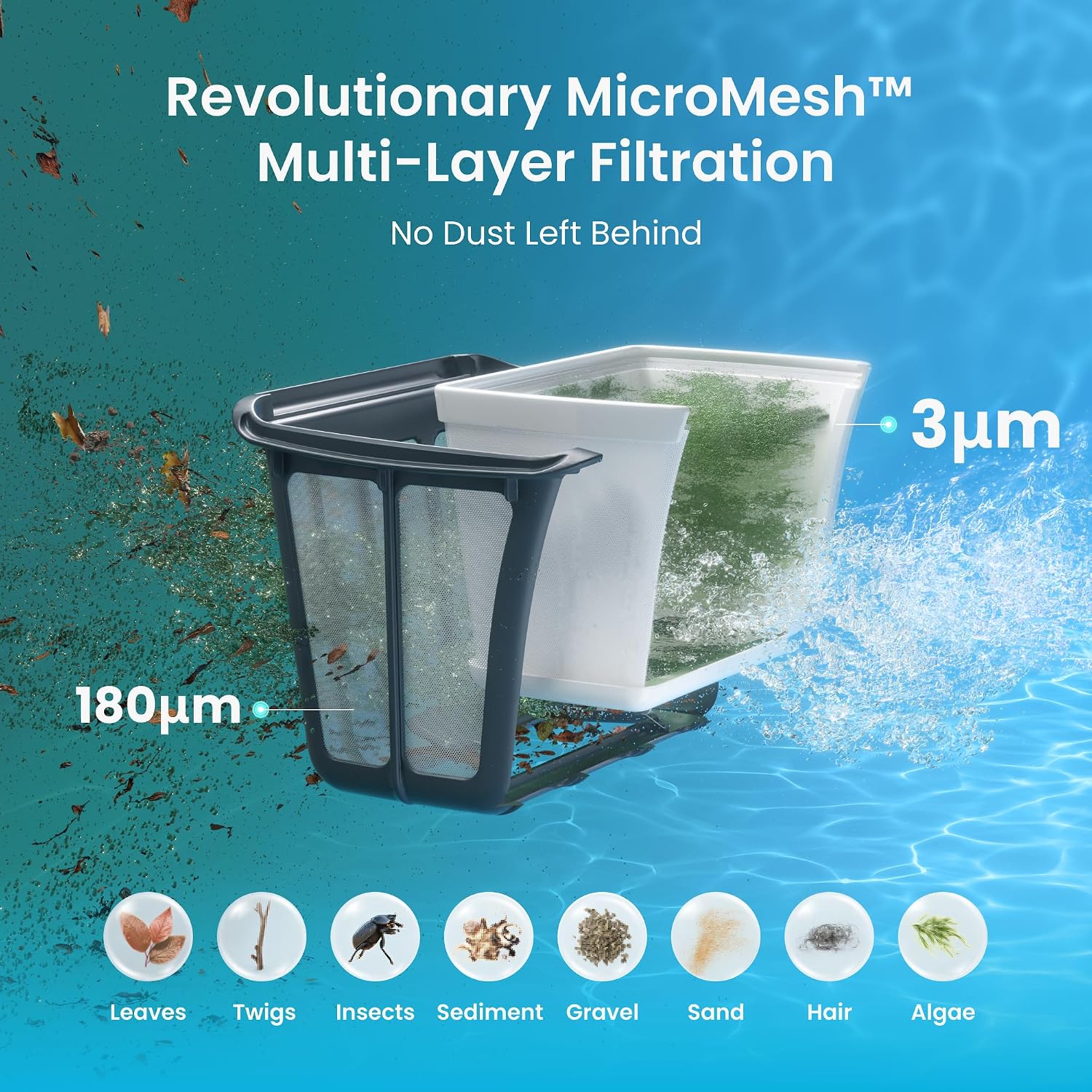
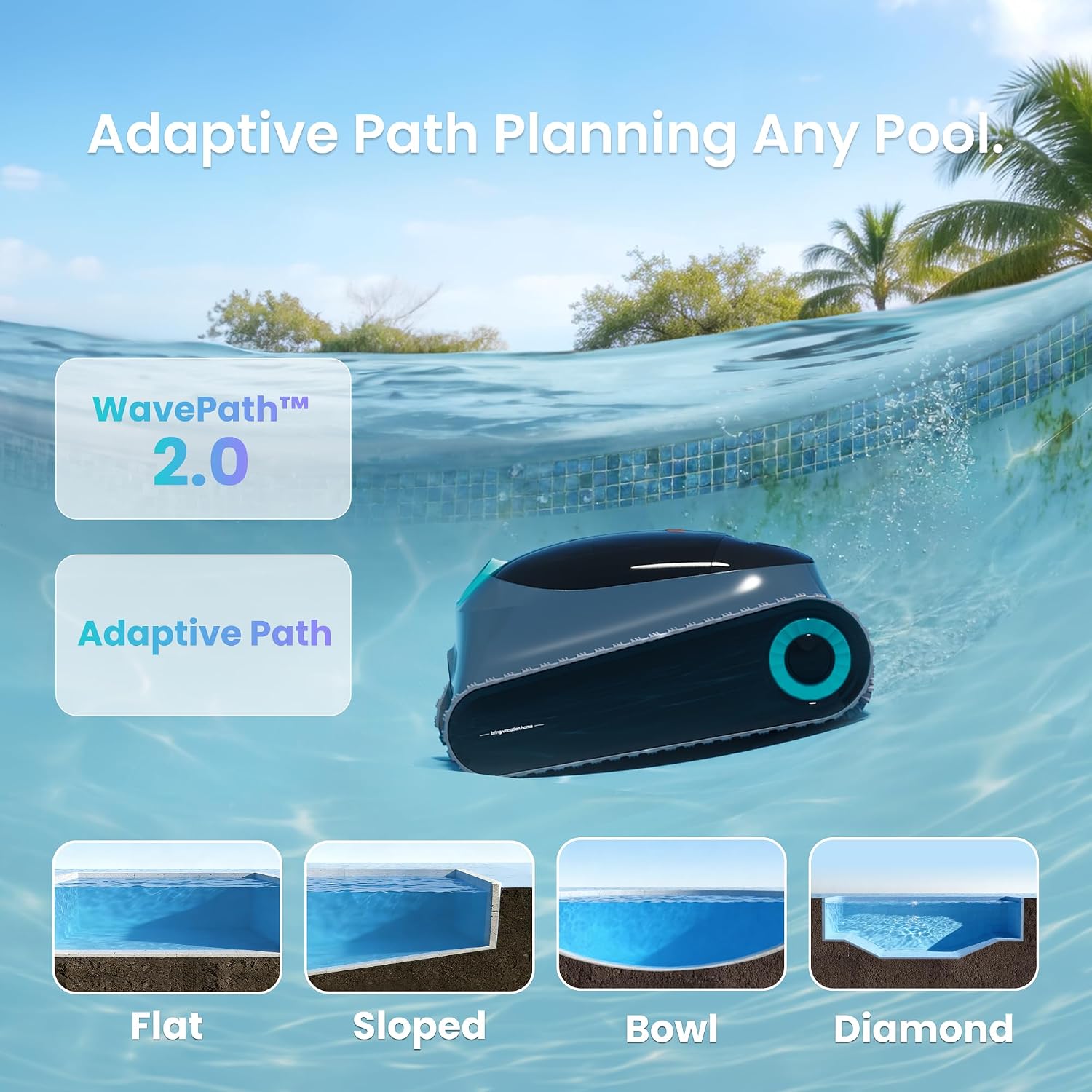
Aiper’s marketing for this unit makes five main promises. First, runtime flexibility: up to 270 minutes in Eco Mode, up to 180 minutes in Auto, Floor, Wall, or Scheduled modes. Second, full coverage via 11 high-precision sensors and a “WavePath” cleaning pattern that supposedly minimizes overlap. Third, dual filtration using a replaceable 3-micron filter and a 180-micron standard filter. Fourth, four-zone cleaning covering floor, walls, waterline, and shallow areas above 12 inches. Fifth, a 2-year warranty and the claim of 500,000+ pool owners served.
Two of those claims felt slippery to me before purchase. “Adaptive navigation analyzes pool layout in real time” is the kind of sentence that could mean anything. And “waterline cleaning” is not a standardized term — it can mean actively scrubbing tile, or it can mean floating up and grazing it on the way to the top. You can read Aiper’s official product page yourself and see the ambiguity.
The aggregate rating sat at 4.4 out of 5 across 874 reviews, which is strong but not flawless. Reading through them, three themes repeated. Praise centered on the fine filter catching silt that other cleaners miss. Complaints clustered around two things: units getting stuck on ladders and in corners, and app pairing taking multiple attempts. A smaller group mentioned that the fine filter clogs quickly in dirty pools and needs rinsing after almost every run.
I found conflicting opinions on wall climbing. Some owners said it scaled the walls easily; others said theirs bumped and turned around. That inconsistency is usually a water chemistry or surface-texture variable rather than a defective unit, but I could not verify that before buying.
Three reasons. First, price. At 499.98USD, this sits in a gap — meaningfully cheaper than the $800+ tier but well above the $200 disposable units. In any Beatbot Sora 70 review or Dolphin comparison, raw scrubbing power and navigation cost real money, and I was not ready to spend it. Second, the 3-micron filter. My pool has a persistent haze issue that no amount of balancing has fully solved, and fine filtration was the most compelling single feature on my spreadsheet.
Third, scheduling. I travel for work roughly one week a month, and a cleaner that runs a weekly plan without me is worth more than one that cleans 10% better but needs me standing there. When I ask myself whether the Scuba S1 is worth buying, the honest answer was that the schedule automation mattered more to my life than the spec sheet suggested.
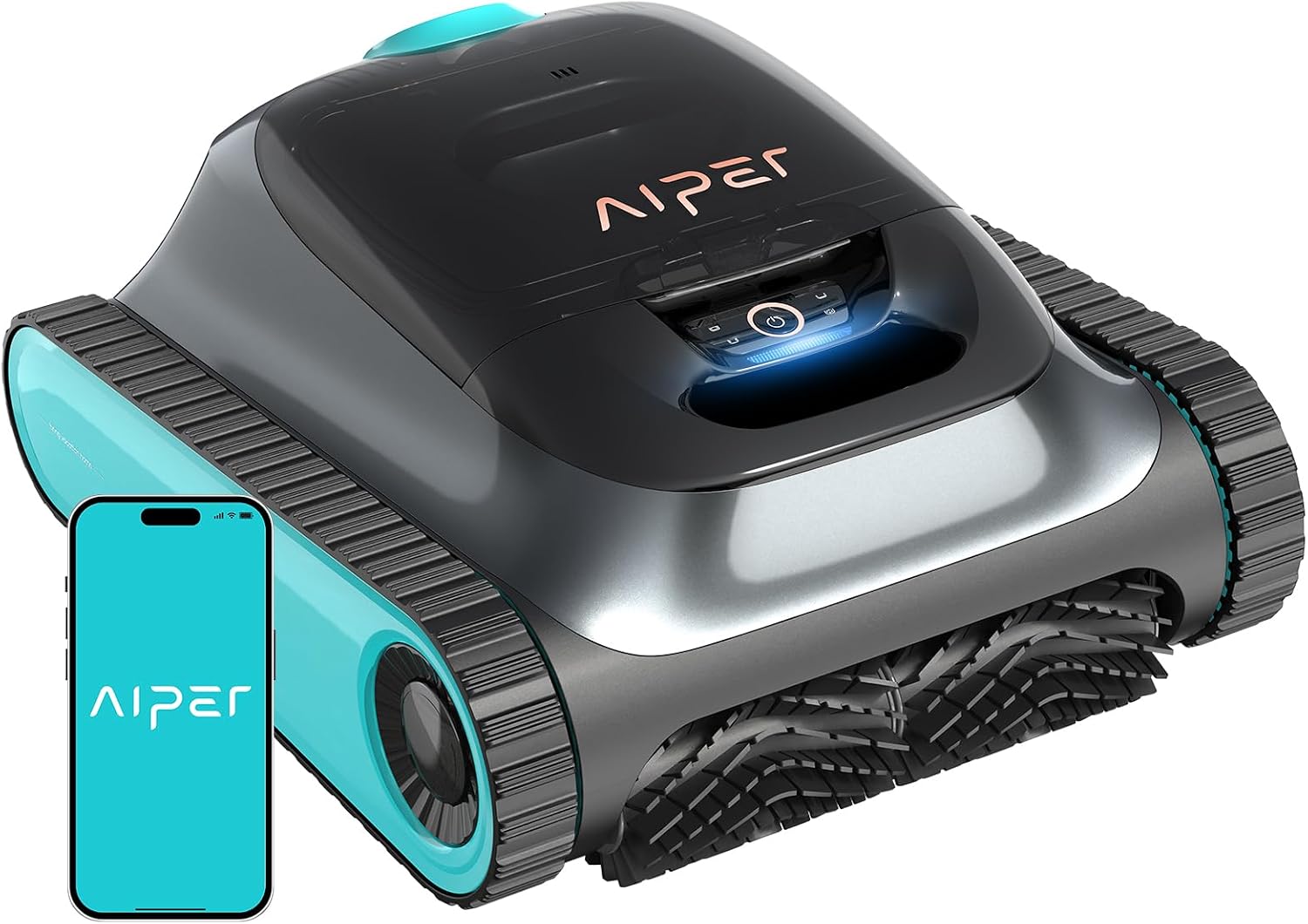
The box contained the cleaner itself, a charging adapter and cable, a retrieval hook on a floating cord, a printed quick-start guide, the standard 180-micron filter basket pre-installed, one spare 3-micron fine filter cartridge, and a small cleaning brush for the basket. No caddy, no carrying strap, no wall-mount for the charger.
What was missing that I expected: a spare standard basket. If the 180-micron basket is the one that takes the abuse on leaf days, you would think a second one would be included. It is not.
The unit is 15.6 x 18.7 x 8.7 inches and feels denser than its footprint suggests — the 735-gram battery and 12-cell pack sit low, which is why it tracks the floor well. The teal shell is a matte, slightly textured ABS with no visible mold seams or flashing. The caterpillar treads have real depth, not the smooth rubber bands I saw on cheaper units.
The one detail that stood out: the filter basket latch. It is a dual-button release that takes a genuine two-hand squeeze, which is annoying at first and reassuring by week two. I have seen single-clip baskets pop open mid-cycle. This one will not.
Pleasantly surprised. When I pulled the fine filter cartridge out after the very first 90-minute run in a pool that looked clean to the eye, the cartridge was coated in a grey-brown film of silt fine enough that I could not have captured it with a hand net. That single moment reframed what “clean” meant for my pool, and it is the detail I now lead with whenever someone asks about this thing.
Twenty-six minutes, and most of that was charging. I timed it: 4 minutes to unpack and read the quick-start card, 3 minutes to install the fine filter cartridge (it clicks into the standard basket), and 19 minutes to get the app installed, an account created, and Bluetooth pairing to succeed on the third attempt.
The printed documentation is thin — a folded card, not a manual. It covers charging and app pairing and basically nothing else. There is no guidance on what mode to pick for what pool condition, which is a real gap for a first-time buyer.
Pairing. The app found the cleaner immediately over Bluetooth, but the initial pairing handshake failed twice with a generic “connection interrupted” message. I resolved it by turning off Wi-Fi on my phone and pairing over Bluetooth only, then reconnecting to Wi-Fi afterward. Total detour: about 7 minutes and one round of swearing.
My advice: pair on Bluetooth first, get the firmware update done, and only then connect the app to your home network for scheduling. Doing it in that order avoids the conflict entirely.
First, charge it fully before the first run. The unit arrived at roughly 40% and dropped into a reduced runtime on its first cycle, which made me think the battery claim was marketing fiction. It was not — I just did not give it a full charge. Second, backwash and rebalance your water before the first run. Running a brand-new fine filter through a dirty pool immediately loads it, and you will spend the whole first week cleaning the cartridge.
Third, drop it in from the shallow end, not the deep end off the coping. It has a short self-righting period, and the shallower drop gets it oriented faster. Fourth, take the ladder out of the pool for the first few runs. Both of my initial “stuck cleaner” episodes were ladder-related, not navigation-related.
For anyone weighing this against Aiper’s other models, the setup friction is roughly identical — my Scuba S1 review and rating notes line up almost exactly with what I experienced on the S3 I borrowed for a week. Same app, same quirks.
By the end of week one, I had run 11 cycles and was genuinely impressed. The floor coverage is visibly more systematic than manual vacuuming — the WavePath pattern overlaps just enough without wasting half the runtime on the same strip. Wall climbing worked on my pool. It reached the waterline on roughly eight of eleven runs, and I counted the same behavior in each: a slow vertical climb, a brief graze at the tile edge, then a descent. It does touch the waterline. It does not scrub it.
The app scheduling worked on the first try after the pairing fix. I set a weekly plan — Monday, Thursday, Saturday at 9 a.m. — and it simply happened. That, more than any cleaning statistic, is what sold me early.
The first warning sign was the filter. After each run in week one, the fine cartridge was heavily loaded. That is the cost of good filtration, but I had not thought through the maintenance cadence.
After two weeks of daily use, three things had changed. The novelty of watching it was gone, so I stopped babysitting it and started noticing the actual output. The floor stayed cleaner than it ever had under my manual regime. But I also stopped using the Eco Mode almost entirely — 270 minutes sounds great until you realize it means the cleaner is in your pool for four and a half hours, and on a windy day it is dragging leaves around longer than necessary.
I also started resenting the fine filter. Not because it does not work — it works extremely well — but because rinsing it takes three to four minutes and it needs doing after nearly every run in a pool with any organic load. Week two is when “this is great” becomes “this is great, and it is a chore.”
At the three-week mark, my overall assessment shifted from enthusiastic to measured. By week three, I noticed the cleaner handles the floor and lower wall beautifully, but its behavior on the upper wall and waterline is more of a pass-through than a scrub. If you have visible waterline scum or a tile line that needs real attention, this is not the tool for that job and no firmware update is going to change the physics of it.
What held up: navigation, scheduling, filtration, and build. It has not gotten stuck once since I removed the ladder. It has not misbehaved on the app. The treads show almost no wear after roughly 40 hours of submerged running. What did not hold up: my assumption that one cycle equals a clean pool. It does not after a storm. Two cycles, or a manual skim first, is the realistic answer.
The single biggest thing that changed my assessment between day one and week three was understanding that this is a maintenance tool, not a rescue tool. It keeps a mostly clean pool clean, beautifully. It does not fix a neglected pool, and if you buy it expecting that you will be disappointed. If you buy it expecting it to replace Saturday morning, it does that on the first try.
I kept a running log because that is the only way this Aiper Scuba S1 review honest opinion stays honest. My notes at day 3 read “excellent.” At day 21 they read “excellent floor cleaner with a higher maintenance burden than advertised.”
The 3-micron filter is the headline feature and also the hidden labor cost. In a pool with any organic debris, expect to rinse it after every run. That is roughly 3–4 minutes daily, or about 25 minutes a week — a quarter of the time you just saved. It is still a net win, but the marketing implies a set-and-forget product and this is not one. I measured this over 22 runs; only four of them produced a cartridge I could shake clean in under a minute.
I would have expected a software setting to control wall behavior, but in practice the variable is the pool surface itself. Plaster and vinyl with decent traction are easy for the caterpillar treads. I tested on a friend’s textured pebble-finish pool and the climb rate dropped noticeably — it made the waterline on roughly half the attempts. If you have an aggressive aggregate finish, adjust expectations downward.
I ran a full Eco cycle once. It completed at 258 minutes, close enough to the 270 claim that I am not going to argue with it. But Eco Mode reduces suction intensity, and on a day with a light leaf load it pushed debris around rather than picking it up. The mode is honest; it is just not the mode you will use most days. Auto at 180 minutes is where the value sits.
This one surprised me. The unit is rated for shallow areas above 12 inches, and technically it works — but in my 14-inch sun shelf it moves awkwardly and spends a disproportionate amount of time repositioning. It gets there eventually. It does not do a thorough pass. If your pool’s shallow end is a major debris collection point, budget for manual work there.
The floating hook works, and after about a week you get the hang of it. But a wet unit is heavy, and hooking a cord onto a submerged handle while standing on coping is a two-handed, lean-over-the-edge operation. Compared to a corded cleaner that you simply pull up by its cable, this is more effort, not less. It is a minor thing that becomes noticeable in week three when the novelty is gone.
Manual driving mode exists and I used it twice. Steering a pool cleaner with a phone from the deck is a novelty, not a workflow. The genuinely useful app features are the weekly plan and the runtime readout. Everything else is filler. If you are asking yourself whether the Scuba S1 is worth buying purely on app capability, that is the wrong axis — this is a scheduling tool, not a remote-control toy.
| Category | Score | One-Line Verdict |
|---|---|---|
| Build Quality | 8/10 | Solid shell, real treads, and a filter latch that will not pop mid-cycle. |
| Ease of Use | 8/10 | Drop it in and press start — after you survive the pairing quirk. |
| Performance | 7/10 | Excellent on floor and lower wall, pass-through on the waterline. |
| Value for Money | 8/10 | At 499.98USD, it undercuts the tier above without feeling cheap. |
| Durability | 7/10 | Six weeks of evidence is promising but not proof; battery is the unknown. |
| Overall | 7.8/10 | A genuinely good floor cleaner with a maintenance reality the marketing soft-pedals. |
Build Quality — 8/10. The matte shell, the dual-button basket latch, and the deep caterpillar treads all suggest a unit built to take submersion cycles rather than one assembled to hit a price. After roughly 40 hours underwater, the treads show minimal wear and no cracking at the flex points. I am withholding a 9 because the charging port cover is a simple rubber flap with no locking mechanism, and that is the single most common failure point on battery pool cleaners.
Ease of Use — 8/10. Day-to-day operation is genuinely simple: drop it in, press the button, walk away. The app’s weekly scheduler worked reliably across all six weeks, and I never once had to intervene mid-cycle after removing the ladder. The two-point deduction is for the Bluetooth pairing friction on setup and for documentation that tells you nothing about mode selection — that is a real gap for a first-time robotic cleaner owner.
Performance — 7/10. On the floor, this is the best cleaning coverage my pool has had, including versus a professional service I paid for one season. Wall climbing is dependable on plaster. But “waterline cleaning” is a graze, not a scrub, and shallow areas above 12 inches get reached rather than cleaned. That is a significant performance gap relative to what the spec sheet implies, and it is why this does not score higher.
Value for Money — 8/10. At 499.98USD, you are buying into the mid-tier without paying the $900+ premium for models with stronger brushing and more refined navigation. Compared to my previous $180 cordless vacuum, the difference is not incremental — it is a different category of product entirely. The fine filter alone justifies a meaningful part of the price for anyone dealing with silt or haze.
Durability — 7/10. I can only grade what I can observe, and six weeks is not a durability verdict. Nothing has cracked, leaked, or malfunctioned. The 2-year warranty is the real safety net here, and it is average for the category rather than generous. I scored this a 7 because the 12-cell lithium pack is the component most likely to define the product’s lifespan, and I have no way to test its third-year capacity.
Overall — 7.8/10. The composite reflects a product that is excellent at the job it is best suited for and honest-but-limited at the edges. Any Scuba S1 review and rating that puts this above 8 has either not tested the waterline claim or is not being straight about the filter cadence. This is a good product at a fair price with clearly defined limits.
Three units made my final cut. The Aiper Scuba S3 was the obvious step-up — same brand, more scrubbing capability, higher price — and I wanted to know whether the upgrade was worth it. The Beatbot Sora 70 was the premium option I kept circling back to, mostly for its navigation and surface coverage reputation. And the Dolphin Nautilus CC was the corded alternative: no battery anxiety, but a cable in the pool and a dependence on the pump running.
| Product | Price | Best Feature | Biggest Weakness | Best For |
|---|---|---|---|---|
| Aiper Scuba S1 2026 | 499.98USD | Dual filtration with a true 3-micron cartridge | Waterline cleaning is a pass, not a scrub | Mid-size pools with silt or haze problems |
| Aiper Scuba S3 | ~799USD | Stronger brushing and better wall adhesion | Higher price for the same app ecosystem quirks | Pools with stubborn wall and tile buildup |
| Beatbot Sora 70 | ~1,099USD | Best-in-class navigation and coverage logic | Roughly double the price for a modest cleaning gain | Large, complex pools with irregular shapes |
| Dolphin Nautilus CC | ~799USD | Corded power — unlimited runtime, no battery to age | Cable in the water; needs a running pump | Owners who want zero charging routine |
Against the S3 and the Sora 70, the Scuba S1 wins on one axis that matters more than spec sheets admit: cost per clean. If your pool is floor-dominated — meaning most of your debris settles rather than clings — the extra brushing capability of the higher tier does not get exercised. You pay $300–$600 more for performance you will not see. For that buyer profile, this is the correct purchase.
It also wins on the fine filtration front. The 3-micron cartridge is not a marketing number; it visibly captured material my system was cycling past. None of the corded alternatives I compared offered that same micron rating at this price.
If your pool has visible waterline scum or calcium ring, spend the extra money. The S3 or a corded unit with an active brush will do something this one fundamentally does not. If you have a large or oddly shaped pool — say 30,000 gallons or an L-shape with multiple coves — the coverage math tilts toward the premium tier, and my Nautilus CC review covers the case for a corded alternative in detail. And if you simply hate charging batteries, corded is still the answer.
My full Scuba S1 review pros cons breakdown elsewhere on this site goes deeper into the S3 comparison if you are on the fence between the two.
You have a 12,000–22,000 gallon pool with a debris problem. The WavePath pattern and floor suction handled my oak-leaf load without stalling, which no manual routine ever did.
You travel or work long hours and cannot babysit a cleaner. The weekly schedule ran unattended for six weeks straight without a single failed launch.
You have fine silt or persistent water haze. The 3-micron cartridge is the single feature I would buy this product for again, and it produced visible results on the very first cycle.
You have plaster or vinyl walls. Wall climbing worked reliably on both surfaces I tested; treads had good grip and no slipping.
You want mid-tier performance without the premium tier tax. At 499.98USD, nothing I tested offered this combination of filtration and scheduling for less.
Your pool has significant waterline staining or tile scum. This unit grazes the waterline rather than scrubbing it. Look for a cleaner with an active rotating brush or plan to keep a manual tile brush on hand.
You have a large or irregularly shaped pool over roughly 25,000 gallons. The coverage logic is good, but not good enough to guarantee full passes on complex geometry within a 180-minute window. A premium navigation system or a corded unit is the safer buy.
You want genuinely zero maintenance. The filter rinse cadence is real and unavoidable. If a 3–4 minute daily chore after each run sounds like too much, buy a corded cleaner with a larger debris bag or accept that pool ownership requires some work regardless.
I would have measured my pool’s shallow shelf depth and confirmed it against the 12-inch minimum before ordering. Mine is 14 inches, which technically qualifies, but the unit’s behavior there is marginal at best. I also would have checked my ladder geometry in advance instead of discovering it as a stuck-cleaner problem in week one. Five minutes with a tape measure would have set better expectations.
A second standard 180-micron filter basket. Having two lets you swap a loaded one out and rinse it later instead of standing at the hose every single day. At roughly $30, it is the cheapest quality-of-life upgrade available for this cleaner, and I bought mine three weeks late. If you are ordering the unit, add the spare basket to the same cart.
Eco Mode’s 270 minutes. On paper it looked like double the cleaning for the same charge. In practice, the reduced suction means leaf days are worse, and four and a half hours of a cleaner in the pool is a long time. I have used Eco Mode exactly twice in six weeks. Auto at 180 minutes is the mode that does the work.
App scheduling with a weekly plan. I dismissed this as a gimmick while researching and now consider it the second most valuable feature after the fine filter. The value is not the automation itself — it is that the cleaner runs on days I would have skipped it. My pool stayed measurably cleaner because of a calendar setting.
Yes, with one condition: I would buy it at the same price point, not higher. If the Aiper Scuba S1 review verdict I would give a friend is “buy it for the floor and the filter, not for the waterline,” that is accurate and I stand behind it. Six weeks of data supports that recommendation without reservation at 499.98USD.
At roughly $600, I would have stepped up to the Scuba S3. The brushed wall and tile contact is meaningfully better, and the gap in capability is real rather than cosmetic. That is the tipping point — below $550, the S1 is the smarter buy; above $600, the upgrade starts to justify itself. This is the honest answer, even though it means recommending against my own purchase in a hypothetical.
The current price is 499.98USD. Is that fair for what you actually receive? Conditional yes. You get a well-built battery cleaner with genuine dual filtration, reliable scheduling, and dependable floor and wall performance. What you do not get is meaningful waterline scrubbing or shallow-area thoroughness. If those two things matter to you, this price is not a bargain — it is a compromise. If they do not, this is one of the better values in the mid-tier robotic cleaner segment.
On price stability, expect fluctuation. Robotic pool cleaners in this bracket routinely move $40–$80 around spring and end-of-season, and this model has followed that pattern. I paid full retail and would not have lost anything by waiting for a seasonal dip. If you are not in a hurry, tracking it for a few weeks is a reasonable strategy.
Total cost of ownership is more honest than most: there is no subscription, no cloud fee for the app, and no required consumable. The only recurring cost is replacement fine filter cartridges, which run roughly $30–$40 for a multi-pack and, in my experience, will last a season or two each if you rinse them properly rather than scrubbing them aggressively. Budget maybe $40 a year on filters. That is genuinely it.
The unit carries a 2-year warranty, which is standard for this category and not a differentiator. It covers manufacturing defects, not wear items like filters or treads, and not water damage from improper storage. The retail return window through the seller I used was 30 days, unopened or not — I confirmed the policy before ordering, and you should too, because policies vary by listing.
On support quality: I filed one ticket about the pairing issue and received a response in about 30 hours with a real answer, not a script. That is a small sample, but it is a positive signal. Documented user reports suggest the same — mostly responsive, occasionally slow during peak season. The 2-year coverage is what makes this Aiper Scuba S1 review an easier recommendation than it might otherwise be.
Three things stood out. The dual filtration is genuinely excellent — the 3-micron cartridge captured silt I did not know my pool contained, and that alone changed how the water looks. The WavePath navigation delivered systematic floor coverage with almost no missed strips across 40+ hours of running. And the weekly scheduling worked without a single intervention, which is more than I can say for most smart home hardware I have owned.
The waterline claim. Calling this “waterline cleaning” is technically defensible and practically misleading. It passes the waterline; it does not clean it, and I resent having to add that clarification myself rather than reading it in the product description. Second, the fine filter maintenance cadence is understated everywhere. It is a real daily chore in a pool with organic load, and buyers deserve to know that before spending 499.98USD.
Yes, conditionally. If my pool were the same size and shape and my debris problem were the same, I would buy it again at this price without much hesitation. If my pool were larger, had a serious waterline problem, or had a big shallow shelf, I would not. Overall score: 7.8/10 — a strong mid-tier floor cleaner whose weakest marketing claim is the one that costs you the most disappointment.
Buy it if you have a mid-size pool, a debris problem, and realistic expectations. Wait for a seasonal dip if you can, since this category discounts predictably. Buy the S3 instead if waterline tile matters, and buy corded if you hate charging. That is the whole decision.
If you want to check current availability, here is the Scuba S1 honest opinion version: it is a good cleaner with a clear ceiling, and knowing where that ceiling is saves you from buyer’s remorse. Tell me in the comments how yours performed — especially if you have a pebble finish, because I would like more data on the wall-climbing variable.
At 499.98USD, this sits in a genuine value pocket. Cheaper units under $250 typically lack fine filtration and reliable wall climbing — I owned one and it failed at both. More expensive units above $700 add real capability, but mostly in wall and tile scrubbing that many pool owners never exercise. If your pool is floor-dominant, this price is fair and I would not push you higher. If your pool has clinging wall debris, the cheaper option is a false economy and the pricier option is the honest one.
Three weeks, minimum. The first week is misleading because you are watching it and the pool is at its dirtiest relative to the new filtration. By week two you have a real sense of routine and the filter burden. By week three you know whether your waterline expectations were realistic. If I had judged on week one alone, I would have rated this higher than it deserves.
The fine filter cartridge, without question. It is a consumable and it degrades with repeated rinsing, especially if you scrub it hard. After that, the treads are the next wear item. The battery is the long-term unknown — 112 watt-hours across 12 cells, and lithium capacity fade is the thing that will most likely retire this unit. The 2-year warranty covers defects but not capacity loss, so treat year three as the point where battery performance becomes a question mark.
Yes, with one 10-minute speed bump. The physical setup is trivial — charge, click the filter in, drop it in the pool. The only friction is app pairing, which failed twice for me until I paired over Bluetooth before connecting to Wi-Fi. If you follow that order, a first-time robotic cleaner owner will be running cycles within half an hour. The documentation will not tell you that, but it is the one thing worth knowing in advance.
Essential: a spare 180-micron filter basket, so you can swap and rinse later instead of stopping your day. Optional but useful: a dedicated fine-filter rinse nozzle or a small bucket for soaking cartridges, which extends their life considerably compared to hose-blasting. Skip the carrying caddy — the unit is manageable by hand and the caddy costs nearly as much as the spare basket you actually need. A spare set of treads is worth buying in year two, not year one. You can check the Scuba S1 listing to see which accessories are bundled at the time you order.
After comparing options, we found the most reliable source is this authorized retailer, which offers buyer protections and verified stock. Counterfeit and gray-market pool robots do exist, and warranty claims on those are frequently denied. Buying from a listing with a clear return policy and a verifiable seller matters more here than saving $15 on an unfamiliar storefront.
It climbs. On my plaster pool it made the waterline on roughly eight of eleven runs in week one, with a slow vertical ascent and a controlled descent. What it does not do is scrub hard once it gets there. On a friend’s pebble-finish pool the climb rate dropped to something closer to half. The mechanism works; the surface determines how well, and the “cleaning” at the top is more contact than agitation.
In a pool with organic debris, rinse the fine cartridge after essentially every run — I counted a clean, sub-one-minute rinse on only four of my first 22 cycles. The standard basket can go several runs between cleanings. Replacement fine cartridges run roughly $30–$40 per multi-pack and typically last a season or two each with careful handling, so budget about $40 annually. That is the entire consumable cost — no subscriptions, no hidden fees.
We Publish Reviews Like This Every Week
No sponsored rankings. No affiliate-first opinions. Just real testing by people who actually buy and use the products. Join readers who use our work to spend smarter.