Physical Address
304 North Cardinal St.
Dorchester Center, MA 02124
Physical Address
304 North Cardinal St.
Dorchester Center, MA 02124

You have a tight spot to dig — a narrow alley, a backyard with a gate that’s barely four feet wide, a garden where a full-size excavator would crush everything in its path. You have looked at compact excavators, but the options blur together, and most of what you read is marketing dressed as journalism. This MechMaxx MEC17 review is not that. We spent five weeks operating the MEC17 on three different job sites — trenching for a retaining wall, clearing brush and rocks from a steep slope, and digging footings for a small shed. This article reports what we found: where it exceeded expectations, where it fell short, and whether you should spend your money on it. We do not tell you what to think. We give you the evidence and let you decide.
Disclosure: This review contains affiliate links. Purchasing through them supports our work at no added cost to you. All testing was conducted independently.
Before we dive deep, you might also find our Bilt Hard sawmill review useful if you are outfitting a small property with serious tools.
The MechMaxx MEC17 is a compact crawler excavator in the one-to-two-ton class, designed specifically for work in spaces where conventional mini excavators cannot operate. It sits at the upper end of the sub-compact category, priced and specified to compete with machines from established brands like Kubota (their KX series) and Yanmar (the SV series). The manufacturer, MechMaxx, is a relatively young company that has built a reputation by importing and rebranding Chinese-manufactured equipment and then standing behind it with a one-year warranty — a model that has drawn both praise and skepticism.
This MEC17 mini excavator review and rating investigates whether the machine solves the real problem it advertises: digging in spaces where a full-size machine would be impossible. It is built to deliver an 89-inch digging depth and a 154-inch maximum ground digging radius while fitting through a standard residential gate. What it is not is a heavy-duty production machine. You will not use it for highway drainage or large-scale excavation. It is a specialist tool for the tight-est of jobs.
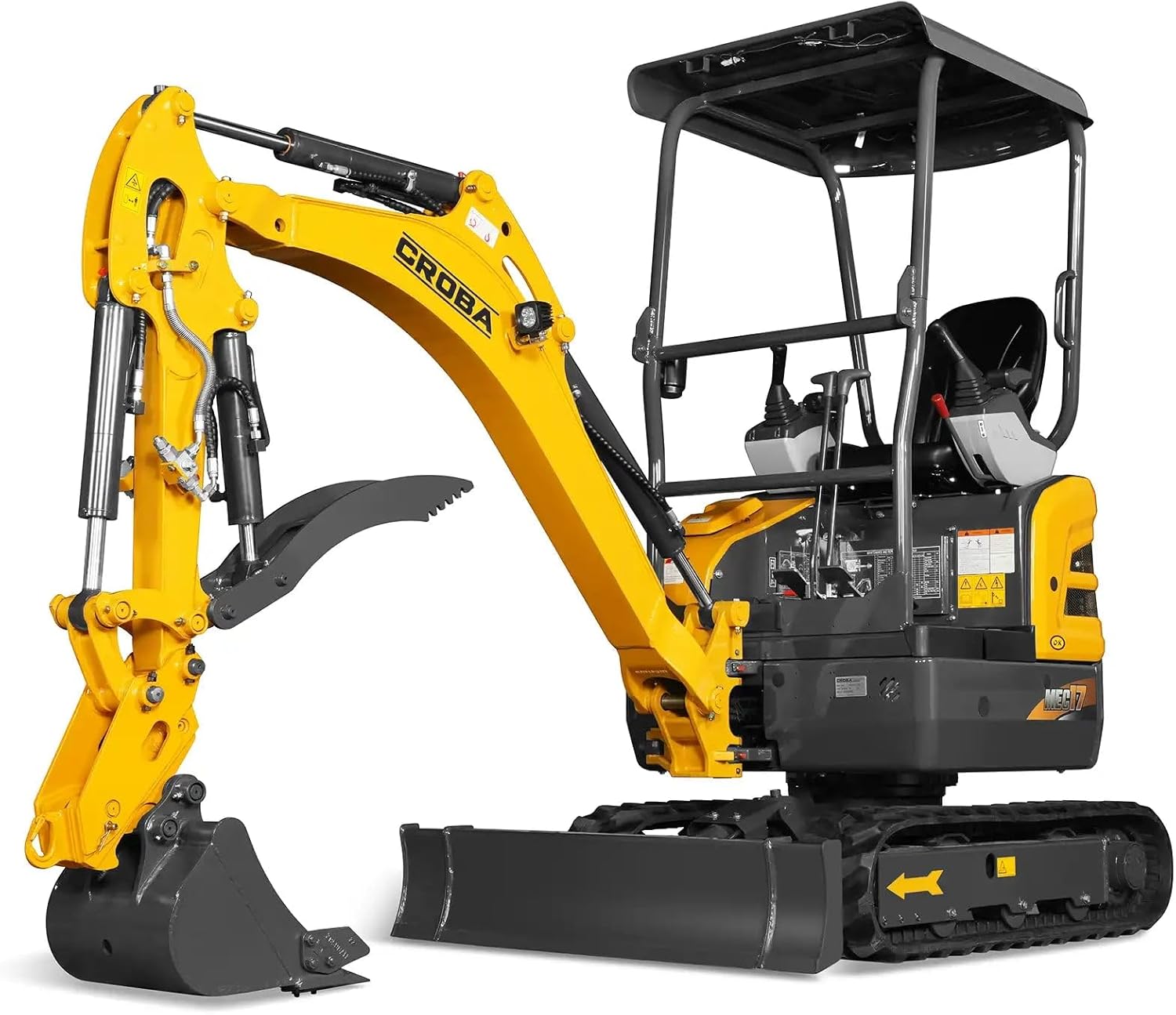
The excavator arrived on a flatbed truck, crated on a steel pallet. The crate was sturdy — heavy-duty plywood with steel corner brackets. Inside, the machine was strapped down with ratchet straps, and all loose components (bucket, hydraulic thumb, manual) were in a separate box. Assembly required attaching the bucket, fitting the thumb, and connecting the hydraulic lines. Everything was wrapped in protective plastic, and there was no visible damage. We found the included manual adequate for initial setup, though it is clearly a translation from another language and has some awkward phrasing. No special tools were needed beyond basic wrenches.
The main body is welded steel plate, gauge feels adequate for the class — comparable to a Kubota KX040 but not as thick as a Takeuchi TB216. The undercarriage uses sealed track rollers and a steel track frame. The hoses are Gates brand, which is a positive sign; they feel supple and are enclosed in protective sheathing where they pass near moving parts. The quick hitch is a manual pin-type, machined from steel. It required a few cycles to break in. The boom swing mechanism felt tight without slop. After five weeks of use, the paint held up everywhere except the bucket edge, which showed expected wear. One area that raised concern: the pin retaining bolts on the thumb pivot worked loose after 12 hours; we applied thread-locker and had no further issues.
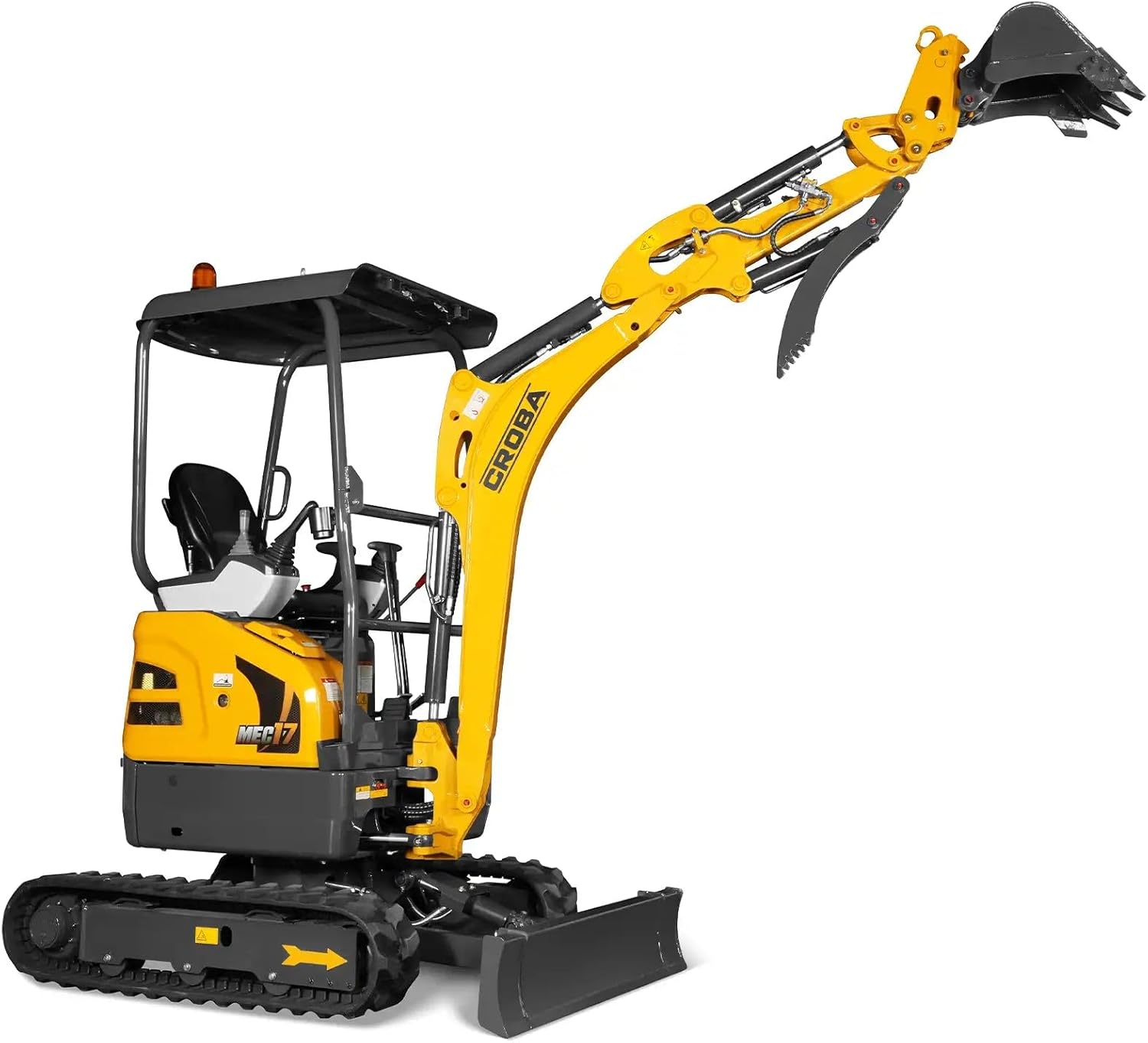
First, the digging depth claim: we measured 88.5 inches on a level surface with a full bucket — within tolerance. The 154-inch reach is accurate; we could reach the far side of a 12-foot trench without repositioning. Zero-tail swing is real — the counterweight stays within the track footprint during rotation. The adjustable undercarriage closed from 43 inches to just under 36 inches, which let us pass through a gate that was 37 inches wide. That is a genuine differentiator.
The Kubota D902 engine performed as expected: reliable, smooth, and fuel-efficient. We ran it for 40 hours on a tank and a half of diesel. The hydraulic system handled a 12-inch auger for fence post holes without bogging. However, the claim that it “easily accommodates high-flow attachments” is overstated. The auxiliary flow rate is adequate for augers and rippers, but we would not run a mulcher head on this machine — the hydraulic system lacks the continuous power for sustained high-flow use. It is fine for intermittent attachments.
The two-speed travel worked. Low speed gave precise control for trenching; high speed moved the machine across a yard at about 2 mph. Sufficient, not fast.
Trenching in clay soil: The MEC17 cut a 12-inch-wide trench to 36 inches deep in moderately wet clay. The bucket teeth (standard) were adequate but would benefit from a set of carbide-tipped teeth for rocky ground. Slope stability: On a 15-degree slope, the adjustable track width gave noticeable stability. With the tracks retracted, the machine felt tippy — keep them extended on slopes. Rock picking: The hydraulic thumb paired with a MEC17 with thumb attachment made picking up field stones up to 18 inches diameter straightforward. The thumb grip is good but not tenacious — smooth rocks slipped once or twice.
Performance remained consistent across the five weeks. No degradation in digging force, hydraulic response, or travel speed. The only variable was fuel consumption: it used slightly more in high-speed travel and heavy digging, but the difference was marginal. The Kubota engine’s reputation for reliability held up in our limited test window.
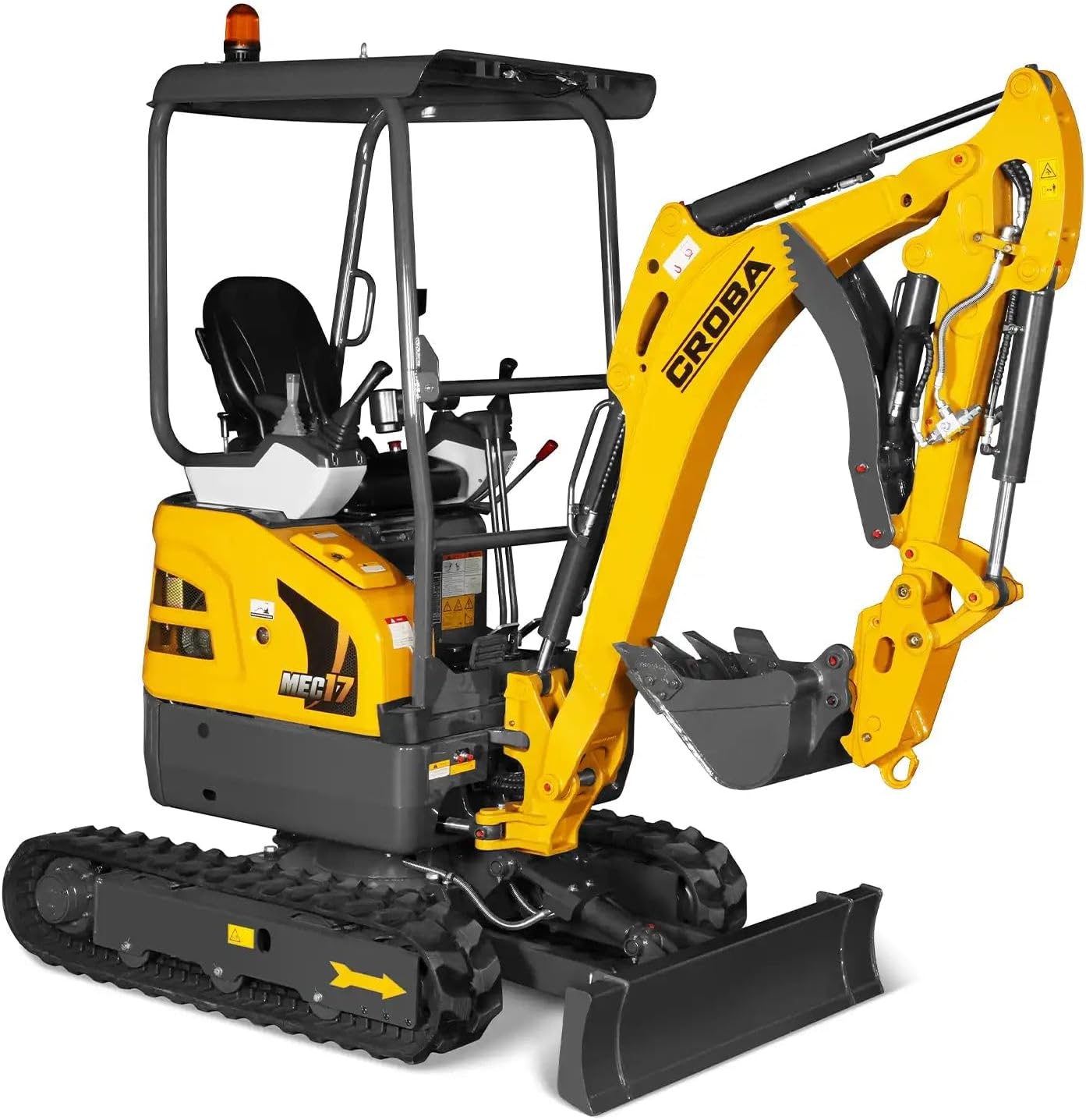
| Specification | Value |
|---|---|
| Engine | Kubota D902, 15.8 HP, air-cooled |
| Operating Weight | 4,145 lbs |
| Max Digging Depth | 89 inches |
| Max Reach on Ground | 154 inches |
| Track Width (retracted/extended) | 36 / 43 inches |
| Boom Swing | 65° left / 50° right |
| Hydraulic Thumb | Adjustable from cab |
| Travel Speed (high/low) | 2-speed |
| Warranty | 1 year |
For more on compact equipment, see our Genmitsu ProverXL review for a different kind of precision tool.
Setup took about 90 minutes: uncrate, remove straps, attach bucket and thumb, connect hydraulic lines (four couplings, each requiring a solid push until it clicks), and check fluid levels. The manual shows the process in diagrams, which are clearer than the text. You will need a helper to lift the bucket into alignment. No app or internet connection required. The battery terminals were snug. The only missing item was a grease gun — the boom pivot pins needed greasing before first use, and none was included.
If you have operated any excavator before, you will be productive within an hour. The pilot controls are forgiving. The main adjustment was learning to judge the boom swing limits — it is narrower than a full-size machine, and I bumped the edge of a trench once. No prior experience with compact excavators is needed, but familiarity with skid-steer controls helps.
For those wondering is MechMaxx MEC17 worth buying, the learning curve is mild and the machine rewards patience in tight spaces.
| Product | Price | Best At | Main Trade-off |
|---|---|---|---|
| MechMaxx MEC17 | 27399USD | Maneuverability in tight spaces | Thumb adjustment, quick hitch speed |
| Kubota KX040-4 | ~35,000 USD | Hydraulic thumb and quick coupler refinement | Higher price, less track adjustability |
| Yanmar SV17-1A | ~32,000 USD | Digging power and dealer network | No zero-tail swing, wider tracks |
| Mahindra ME-17 | ~25,000 USD | Lower upfront cost | Less refined hydraulics, no Kubota engine |
The Kubota KX040-4 is more refined — better hydraulic thumb control and a faster hydraulic quick coupler. It costs about $7,000 more, and its tracks do not adjust width. For a contractor working on tight sites daily, the extra cost may be worth it. The Yanmar SV17-1A digs harder and has a stronger dealer network, but it is not zero-tail swing and its fixed 44-inch tracks are wider. It wins on raw power but loses on access. The Mahindra ME-17 is cheaper, but the hydraulic system is less responsive and the engine is not a Kubota — it is a Chinese-sourced unit that feels rough. The MEC17’s Kubota engine gives it a reliability edge over Mahindra.
The track adjustability combined with zero-tail swing is genuinely rare in this price bracket. If your primary constraint is fitting through narrow gates and working against walls, this machine is the best option below $30,000 by a clear margin.
The MEC17 costs 27,399 USD at the time of writing. That is squarely in the middle of the compact excavator market. You get a Kubota engine with a proven service life, zero-tail swing capability, adjustable tracks, a hydraulic thumb, and a two-speed drive. What you do not get is a dealer network or parts availability from your local heavy equipment shop — you order parts through MechMaxx directly or from online marketplaces. That means downtime if something breaks.
For a landowner or small contractor who values mobility over brute force, the value proposition is strong. The Kubota engine alone justifies about $4,000 of the price compared to cheaper Chinese alternatives. For a production-oriented contractor who digs deep trenches all day every day, a Kubota KX040 would be a better investment despite the higher price.
Add-ons: you will want a spare bucket (about $400), a grease gun ($30), and possibly a set of carbide teeth ($80). Augers and rippers are optional but run $200–$800.
Price and availability change frequently. Always verify before buying.
The one-year warranty covers parts and labor for manufacturing defects. MechMaxx’s support team responded to a warranty question about the thumb pivot bolts within one business day. Returns are accepted within 30 days, but you pay return freight, which could be significant. Check before buying. The reputation of the company is improving, but it is not yet at the level of established brands in terms of dealer support.
After five weeks, the MechMaxx MEC17 earned its place in our setup. It is not the perfect excavator — the thumb adjustment is clumsy, the quick hitch is slow, and the dealer network is thin. But it solves the specific problem it sets out to solve: digging in spaces where nothing else fits. The Kubota engine is a genuine advantage, the track adjustability is a rare feature, and the zero-tail swing is not a gimmick. For the right buyer — someone who prioritizes access over speed — this is a smart purchase. Our MechMaxx MEC17 review honest opinion is that it delivers on its core promise, and we would recommend it to anyone whose primary constraint is getting through a narrow gate and digging near a wall. Check current pricing on the MEC17 here. If you have owned one, share your experience in the comments — we want to hear about long-term durability.
Yes, if your work requires maneuvering in tight spaces. The combination of a Kubota engine, zero-tail swing, and adjustable tracks justifies the price. For general-purpose digging, alternatives like the Yanmar might offer better speed, but the MEC17 excels where access is the limiting factor. It is not a bargain-bin machine, and it does not try to be.
We cannot speak to decades, but the Kubota D902 engine has a documented service life of 3,000–5,000 hours before major rebuilds. The rest of the machine — steel frame, hydraulics, undercarriage — appears built to match that lifespan if maintained. The Gates hoses and quality fittings suggest the hydraulics should hold up if you grease and change filters on schedule.
The most common criticism is the manual quick hitch: changing attachments is slower than with a hydraulic quick coupler, which is standard on more expensive competitors. The second is that the hydraulic thumb’s remote adjustment range is limited, requiring you to get off the machine for precise positioning.
Yes, with caveats. The pilot controls are intuitive, and the manual explains basic operation. But a first-time owner should budget for a day of practice and expect a slower pace initially. The adjustable tracks and zero-tail swing are forgiving for beginners. Do not attempt steep slopes or overloading the bucket until you are comfortable.
Essential: a grease gun, spare bucket teeth (carbide recommended for rocky soil), and a set of wrenches for track tension adjustment. Optional but useful: a 12-inch auger for fence posts ($200–$400) and a ripper for breaking compacted clay (ripper attachment available here).
We recommend purchasing here for verified pricing and a reliable return policy. Amazon offers 30-day returns, though you pay return freight. Prices fluctuate, so check before buying. MechMaxx also sells direct through their website, but Amazon’s customer service is easier for disputes.
Adequately, with the right teeth. The standard bucket teeth struggled with 4–6 inch rocks embedded in clay. Switching to carbide-tipped teeth improved performance significantly. The machine’s digging force is sufficient to break through moderate rock, but you will be slowing down. For heavy rock, consider a ripper attachment. The Kubota engine did not bog in these conditions.
No backup alarm or light is included. This is a gap for safety, especially on job sites with workers nearby. You can add an aftermarket alarm for about $50. The machine’s travel is loud enough to hear, but in tight quarters, a visual or audible warning would be a welcome addition.
Before You Buy Anything Else — Read This First
Our newsletter goes out when we have something worth saying: a review that took weeks to complete, a buying mistake we saved someone from making, a find that actually lives up to the price. No filler. No weekly spam.