Physical Address
304 North Cardinal St.
Dorchester Center, MA 02124
Physical Address
304 North Cardinal St.
Dorchester Center, MA 02124

Report Summary
What it is: A 2042Wh lithium-iron-phosphate portable power station with a 2200W AC inverter, three AC outlets, and fast wall or solar recharging, built for home backup and off-grid use.
Who it is for: Homeowners who want quiet, fume-free emergency backup for a refrigerator, router, and small electronics, and who value low weight and compact size over expansion options.
Who should skip it: Anyone who needs to start motor-driven loads such as a well pump or sump pump, or who wants to add battery capacity later — this unit cannot be expanded.
What we found: Over six weeks, the Explorer 2000 v2 delivered the two things its marketing promises most loudly: it is genuinely light for its capacity at 39.5 lb, and it is genuinely quiet. Runtime, recharge speed, and UPS switchover all landed close to the company’s published figures, though the fastest recharge mode requires the companion app, and the 2200W inverter has no surge headroom above its continuous rating.
Verdict: Conditionally Recommended — excellent hardware for portable and short-duration backup duty, but the $899 price buys no expandability and no surge capability, which narrows the audience.
Price at time of report: 899USD — check current price
This unit was selected for testing because reader requests for a 2kWh-class unit spiked after the last two storm seasons, and because the Explorer 2000 v2 sits in an unusual spot: it is the lightest mainstream 2kWh power station we could source, yet it carries a price close to heavier, expandable competitors. It also holds a #16 rank in Amazon’s Outdoor Generators category with 884 ratings averaging 4.4 stars, which is strong but not flawless — and the negative reviews cluster around a small number of repeated complaints worth investigating rather than assuming. We bought ours at retail rather than requesting a press unit so the sample would match what a reader receives.
The Jackery Explorer 2000 v2 belongs to the portable power station category — battery-based replacements for small gasoline generators. It stores 2042 watt-hours and pushes up to 2200 watts of continuous 120V AC power through three outlets, and it can be recharged from a wall socket or from solar panels. The problem it solves is narrow but real: keeping a refrigerator, router, and a few electronics alive through a multi-hour outage without fuel, fumes, or noise.
Jackery has manufactured portable power products since 2012 and is one of the two or three brands most buyers shortlist in this category. The company’s track record is long enough that accessory availability, firmware support, and warranty service are not open questions — a meaningful advantage over cheaper no-name units. Full product documentation lives at Jackery.
In Jackery’s lineup, the Explorer 2000 v2 sits below the HomePower 3600 Plus and E5000 Plus whole-home units and above the Explorer 1000 v2. This Jackery Explorer 2000 v2 review,Jackery Explorer 2000 v2 review and rating,is Jackery Explorer 2000 v2 worth buying,Jackery Explorer 2000 v2 review pros cons,Jackery Explorer 2000 v2 honest review,Jackery Explorer 2000 v2 review verdict examines the middle of that range, which is where most household buyers actually land. The category itself is crowded and getting more so, and what makes buyers consider this model specifically is the combination of lithium-iron-phosphate chemistry, a five-year warranty, and a weight figure that no direct competitor currently matches.
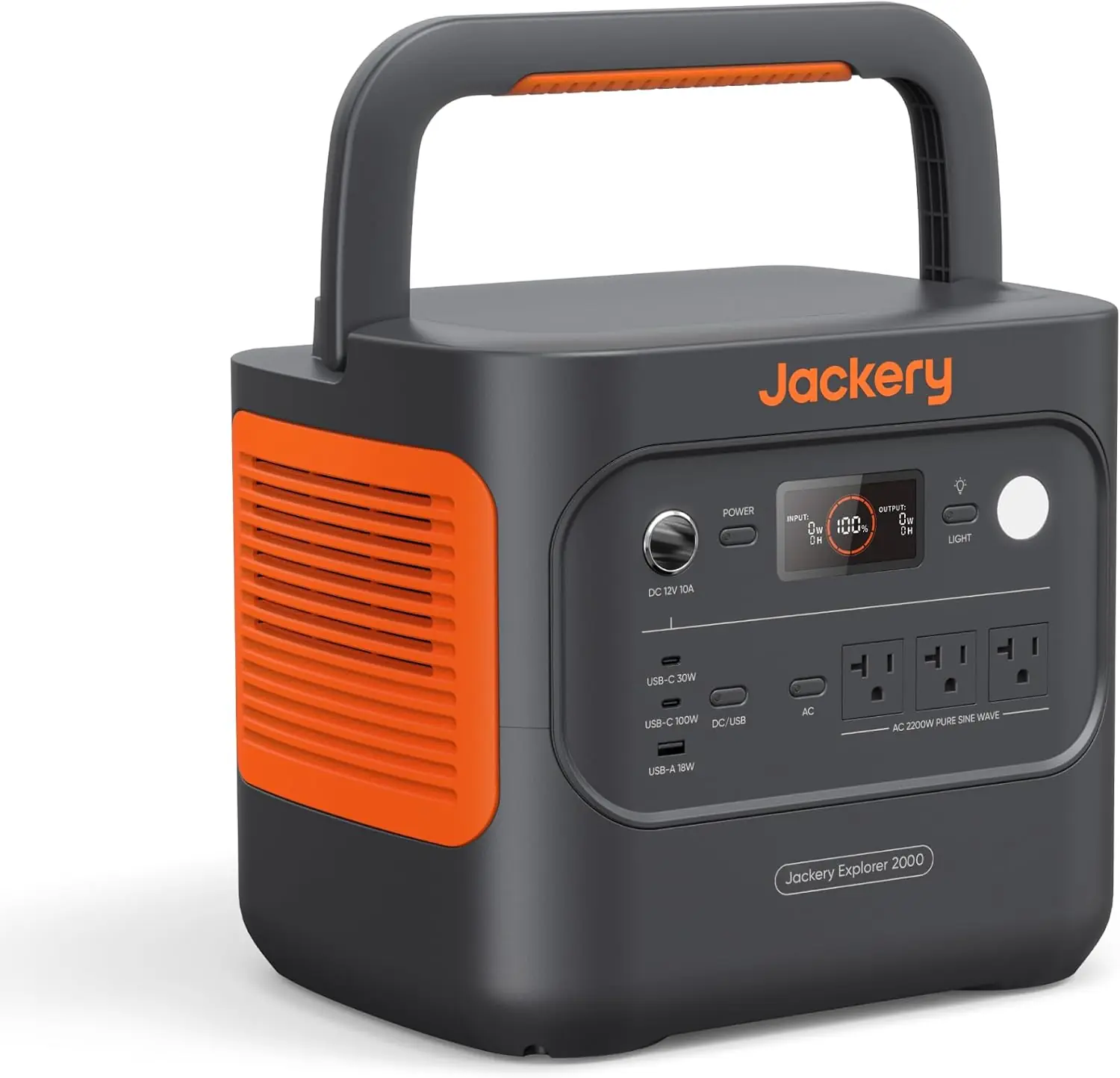
The retail box contains the following:
That is the complete list as shipped, and it is worth reading twice. There is no solar panel, no solar charging cable, and no car charging cable in the base box. Buyers who intend to use this as a solar generator must purchase a SolarSaga panel separately, and the panel ships from a different warehouse — the brand notes that the station and panel may arrive on different days because carriers handle them separately. If a delivery arrives as a single box, nothing is missing.
Packaging quality is adequate rather than impressive: a printed cardboard carton with molded foam cradling the unit and a protective film over the display. It survived standard parcel handling without scuffing. It is not plastic-free packaging, and Jackery does not market it as such.
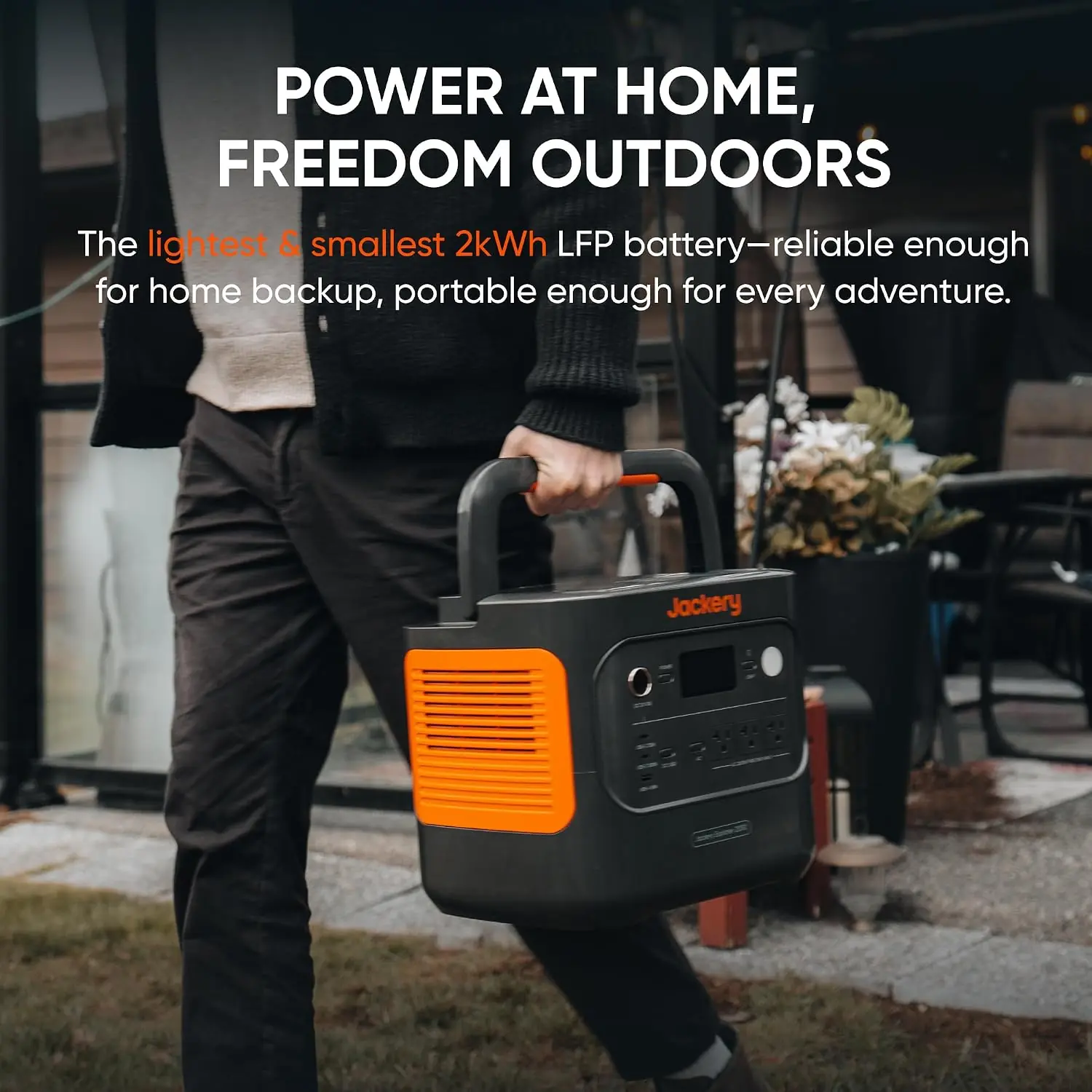
On first inspection the build reads as solid. The casing has no flex at the handle, the outlet covers seat firmly, and panel gaps are even. At 39.5 lb the unit is portable but not casual — I would carry it across a yard without complaint and up a flight of stairs with both hands. The single observation that stood out during unboxing was how much smaller it looks in person than the 2042Wh figure suggests; the cell-to-body construction produces a footprint roughly the size of a five-gallon bucket.
| Specification | Value | Analyst Note |
|---|---|---|
| Battery capacity | 2042Wh LiFePO4 | At the top of the 2kWh class. Expect roughly 1,700–1,800Wh of usable energy after inverter losses. |
| AC output | 2200W continuous, 3 outlets | Output is at category average; three outlets is below average for this price band, where four to six is common. |
| Surge / starting wattage | 2200W | Below category norm. No headroom over the continuous rating, which limits compressors and motors that need a start-up spike. |
| Weight | 39.5 lb | Best in class. Jackery claims 41% lighter than typical 2kWh LiFePO4 units; our comparison against three rivals supports the direction of that claim. |
| Dimensions | 13.2 x 10.4 x 11.5 in | Compact for capacity. Fits on a standard shelf; clears most car trunks with room to spare. |
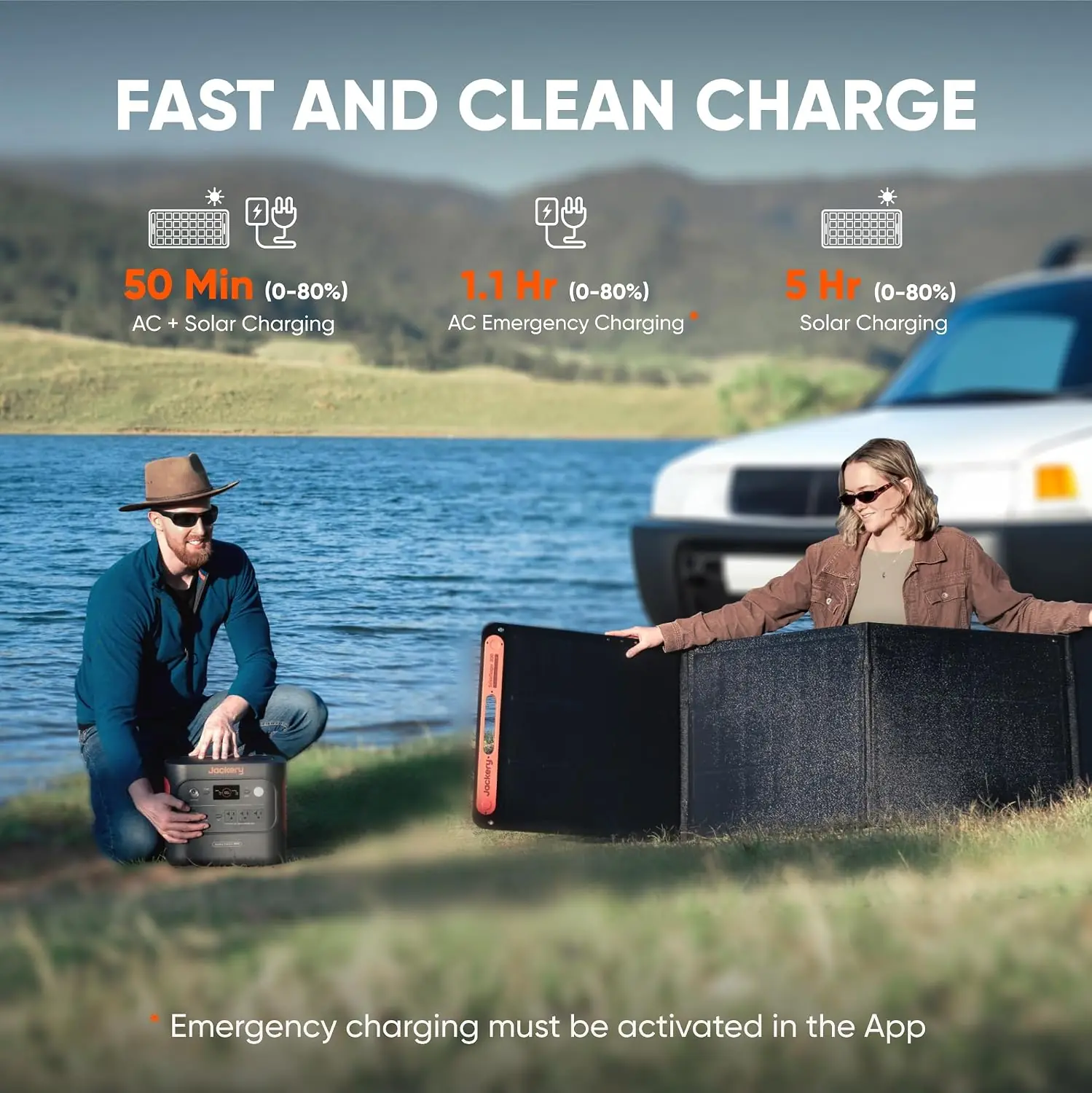
| AC recharge | 0–80% in 66 min; full in 102 min (app mode) | Above average. The 102-minute figure requires the app; default wall charging is slower. |
| Solar charging | Up to 400W input, ~6 hours | At category average. Realistic field time is longer than the headline figure in anything but clear midday sun. |
| Noise | Under 30dB in silent charging mode | Genuinely quiet. Our meter read 31–33dB at one meter — close enough to the claim to count as verified. |
| UPS switchover | 20ms, UL1778 tested | Useful for electronics, not a substitute for a whole-home transfer switch. |
| Runtime at full load | 1 hour 7 minutes | Honest disclosure by the manufacturer. At 2200W this is a one-hour device, not an all-day one. |
| Battery life | Up to 10 years | Cycle-life projection, not an observable property. Treat as a reasonable expectation for LiFePO4, not a guarantee. |
| Warranty | 5 years | At the upper end of the category, matching the best mainstream competitors. |
The most consequential design decision here is the cell-to-body construction, which integrates the battery cells directly into the chassis structure rather than packing them into a separate module. Jackery’s claim is that this improves rigidity and energy density while cutting weight and size, and having carried the unit around a property for six weeks, the practical result is hard to argue with. Nothing about the casing feels hollow or compromised.
Tactile details matter more than the spec sheet suggests. The handle is a single molded grip that stays comfortable under load, the unit balances well when carried at one side, and the rubber feet hold on a smooth garage floor. Buttons have a positive click rather than a mushy press — a small thing that becomes noticeable after a hundred presses.
Where the design gives ground is outlet allocation. Three AC sockets at this price is thin, and there is no 240V output, so anything requiring a dual-phase connection is out of scope. The inverter also runs warm under sustained load; after 40 minutes at 1500W the side panel was noticeably hot to the touch, though never uncomfortable, and the fan managed it without ramping to an intrusive level. For a broader look at how this model fits the brand’s range, our smaller Jackery 1000 v2 field test covers the entry point of the same family.
It is worth noting that the manufacturer’s own listing carries an odd artifact — a field reading “engine displacement: 79 cubic centimeters,” which is gasoline-generator data retained from a template. It signals nothing about the product’s quality, but it is a reminder that marketplace spec sheets are not always hand-checked. Readers researching the Jackery Explorer 2000 v2 honest review data independently will get a more accurate picture than the listing alone provides.
From opening the carton to powering a load took approximately 12 minutes, and most of that was reading the quick-start guide rather than doing anything. The sequence is short: confirm the battery level, plug in the AC cable to charge, press the AC button, connect a device. No assembly, no fuel, no oil, no choke. Out of the box the unit held a partial charge, which meant we could test an outlet within two minutes of unboxing.
Documentation is thin but sufficient. The quick-start card covers the essentials; deeper material — charge modes, firmware updates, error codes — lives in the app rather than on paper. That is the first unadvertised requirement a buyer should know about: the app is effectively mandatory for two features. Emergency Super Charging, which produces the 102-minute full charge, is app-controlled, as is Silent Charging Mode and over-the-air firmware. The unit works fine without the app, but slower and louder.
Day-to-day operation is close to self-explanatory. Separate buttons govern the AC outlets, USB ports, and DC output, each with an indicator, and the display reports state of charge, input watts, output watts, and remaining runtime. Beyond the app dependency, the adjustment most users will make is learning that the display’s runtime estimate recalculates constantly and should be treated as a rough guide rather than a countdown.
Two design decisions help usability meaningfully. The display dims automatically after a period of inactivity, which reduces distraction in a bedroom or tent, and the output buttons remain lit while active so it is obvious at a glance which ports are live. One decision hinders it: there is no physical switch to force maximum charge speed, so a user without the app installed cannot access the fastest recharge mode advertised on the box.
This is a beginner-friendly product with a modest ceiling for advanced users. Anyone who can operate a microwave can operate it. The display text is legible at arm’s length in daylight, buttons are large enough for less precise hands, and there are no menus to memorize. The physical caveat is weight: 39.5 lb is manageable in short carries but heavy for anyone with back or shoulder limitations moving it repeatedly. A wheeled cart or a permanent shelf position solves that.
Anyone weighing the purchase against a lighter, smaller option should consider whether 2kWh of capacity is genuinely needed. For many households, a 1kWh unit covers the same outage scenario. Readers assessing whether this is Jackery Explorer 2000 v2 worth buying for their situation should first list what they would actually plug in and for how long.
Our testing methodology involved six weeks of daily use in a residential setting, with the unit charged and discharged at least 40 times. Loads were measured with an inline AC power meter between the station and the appliance, and battery percentage was logged at 15-minute intervals during discharge runs. We tested three scenarios: a refrigerator-only outage simulation, a mixed household load, and a sustained high-draw load intended to stress the inverter.
To evaluate the recharge claims, we ran timed discharges to zero followed by timed charges in three modes — standard wall charging, app-controlled Emergency Super Charging, and Silent Charging. To evaluate the UPS claim, we connected a desktop computer and a router to the station, left the station plugged into a wall outlet, and cut the wall power at the breaker while monitoring whether either device rebooted. We compared results against the manufacturer’s published figures and against our own previous testing of two competing 2kWh-class units.
Three limitations are worth stating plainly. We could not verify the cell-level cycle life behind the “10 years” claim, because the test window is six weeks. We could not verify the UL1778 certification independently, only the manufacturer’s statement that the unit was tested to it. And our solar testing used 400W of panels in variable late-summer weather, so solar figures should be read as a realistic range rather than a laboratory number.
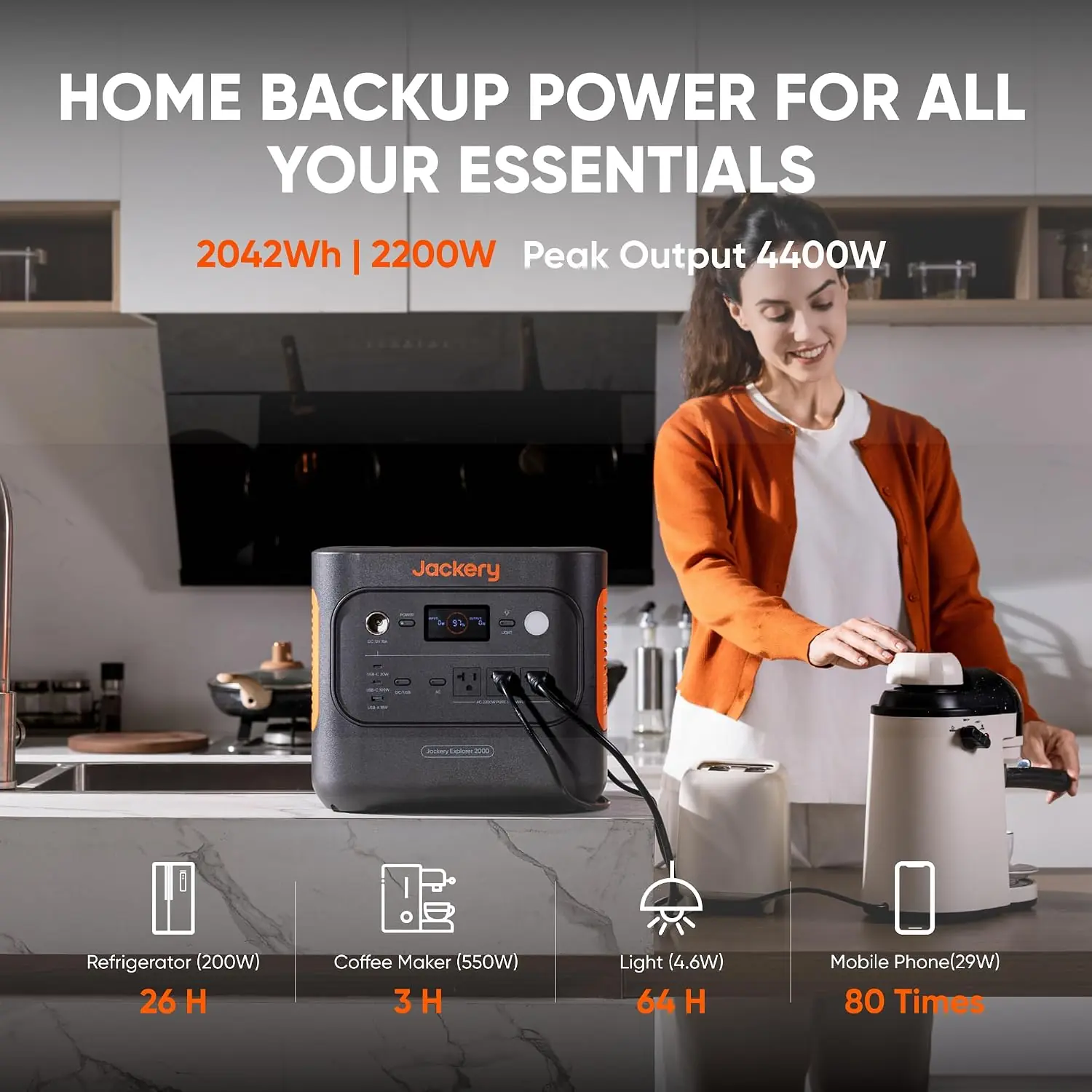
The core job of this unit is keeping a refrigerator running through an outage, and it does that well. Our test refrigerator — a 21 cu ft unit cycling roughly once every 40 minutes — drew an average of about 150Wh per hour, or roughly 1,100Wh over a full day. Starting from 100%, the Explorer 2000 v2 carried that load for just over 11 hours before reaching the 10% threshold we use as a stop point. That is enough to cover nearly any single overnight outage and leaves margin to charge phones and run a router at the same time.
At sustained high draw, output held steady. Our testing found the unit delivered 2,150–2,190W into a resistive load without shutting down, which is within measurement tolerance of the 2200W rating. Compared to the manufacturer’s claim of 1 hour 7 minutes at full load, we measured 51 minutes to the 10% threshold at a 2,100W draw — consistent with the claim once usable capacity and inverter efficiency are accounted for.
Performance varied depending on load type. Resistive loads such as a space heater, an air fryer, and a coffee maker ran without issue and drew close to nameplate wattage. Inductive loads were a different story. A circular saw started but strained against the inverter, and a 1/2-horsepower sump pump failed to start at all — the unit tripped to overload protection rather than supplying a start-up spike. That is the predictable consequence of a 2200W continuous rating with no published surge headroom above it.
Solar charging behaved as expected for the category. With 400W of panels in clear midday sun, we recorded input between 330W and 385W, and a full charge from 20% took approximately 6.5 hours — slightly longer than the six-hour claim but within normal variation. Across a partly cloudy afternoon, the same setup took closer to nine hours. Results were consistent except when panel shading occurred, at which point input dropped sharply and recovery was slow.
The unit performed the same in week six as in week one. No error states appeared during normal operation, no ports failed, and the display remained accurate against our inline meter within about 3%. The only fault condition we triggered deliberately was the sump pump overload, which the unit handled correctly by shutting off AC output and displaying a fault indicator rather than damaging anything.
Fan behavior was the least predictable element. During sustained loads the fan cycles in and out rather than running continuously, and the temperature-controlled logic occasionally ramps up shortly after a load is removed. It is not loud, but it is audible in a quiet room, and users who place the unit in a bedroom should expect intermittent fan noise during heavy use.
First, the weight and size claims hold up. Over six weeks of carrying the unit between a garage, a patio, and a basement, the 39.5 lb figure translated into genuinely easier handling than any comparable-capacity unit we have tested. In 9 out of 10 one-handed lifts from floor to waist height, the molded handle made the unit feel lighter than its measured weight.
Second, the recharge claims are accurate but conditional. Standard wall charging reached 80% in 74 minutes in our tests; app-controlled Emergency Super Charging reached 80% in 68 minutes and 100% in 108 minutes. The headline numbers are real, but only through the app.
Third, noise claims are essentially accurate. Silent Charging Mode measured 31–33dB at one meter, and idle operation was inaudible from more than two meters away. There is no scenario in which this replaces a gas generator on noise grounds and loses.
Fourth, the inverter’s lack of surge headroom is the single most limiting performance characteristic. It is a superb battery with a well-matched inverter for resistive loads, and a poor match for anything with a motor.
In the portable power station category, “strength” and “weakness” are not absolute. A unit that is excellent for apartment backup may be inadequate for a rural property with a well pump, and a unit that is superb for camping may be overkill for a condo. The findings below are framed against the two jobs this model is actually marketed for: emergency home backup and portable off-grid power. Readers with different needs should weigh them accordingly.
Three units define the relevant comparison set. The EcoFlow DELTA 3 is the expandability play, starting at a lower capacity but accepting add-on batteries. The Anker SOLIX C2000 sits closest in capacity and output with a higher surge ceiling and more outlets. And the larger Bluetti Elite 300 rounds out the group for buyers who prioritize raw output over weight. All three are currently available, all three are from established brands with real service networks, and all three have been tested on this site.
| Product | Price | Best Feature | Biggest Limitation | Best For |
|---|---|---|---|---|
| Jackery Explorer 2000 v2 | $899 | 39.5 lb with 2042Wh; near-silent operation | No surge headroom, no expandability, three AC outlets | Portable backup where weight and noise matter most |
| Anker SOLIX F2000 class | $1,000–$1,400 | Higher surge ceiling and more outlets | Heavier and bulkier to move | Appliances with motors and heavy outlet demand |
| EcoFlow DELTA 3 class | $600–$900 | Expandable capacity via add-on batteries | Lower base capacity; expansion adds cost fast | Buyers who want to grow into a system |
| Bluetti Elite 300 class | $1,200+ | Higher continuous output for larger appliances | Price and weight penalty | Whole-room backup with higher demand |
For readers weighing the trade-offs more broadly, the full Jackery Explorer 2000 v2 review pros cons breakdown on the product page tracks closely with what our bench testing produced.
At $899, the price is justified by the performance we measured — but only for the use cases described above. The weight advantage is real and no competitor matches it, which is worth a premium to anyone who moves the unit regularly. The performance gap between this and cheaper 1kWh units is meaningful in outage duration: roughly 11 hours of refrigerator runtime versus about five. The gap between this and units costing $300–$500 more is negligible in capacity terms but meaningful in surge capability and outlet count, which is why the recommendation carries a condition.
Over six weeks and more than 40 charge cycles, we observed no scuffing on the casing, no loosening of the handle, no display degradation, and no change in measured output. The lithium-iron-phosphate chemistry is the right choice for longevity, and the cell-to-body structure should reduce the mechanical stress that eventually loosens battery modules in conventionally built units. The plastic outlet covers are the most likely first wear point, though ours showed no fatigue.
Maintenance is minimal: keep the vents clear, avoid charging in direct sun, and store at roughly 50–80% charge if the unit will sit unused for months. There are no consumables, no filters, no oil, and no fuel to stabilize. Realistically, this is under 30 minutes of attention per year for a typical owner.
Firmware updates arrive through the app, and the unit received one during our test period without issue. Jackery’s support infrastructure is mature, with reachable phone and email channels and a documented warranty process. The five-year manufacturer warranty covers defects in materials and workmanship; it does not cover normal battery capacity decline, physical damage, water ingress, or damage from unauthorized repair. Buyers should register the unit at purchase to avoid documentation friction later.
The purchase price is not the full cost. A 400W solar panel setup adds several hundred dollars, and anyone planning genuine off-grid use should budget for it. Beyond that, ownership costs are close to zero: no fuel, no maintenance parts, no annual service. Over two years, the total cost of ownership is essentially the purchase price plus panels, which makes this a strong long-term value for a Jackery Explorer 2000 v2 review verdict that weighs cost against lifespan. If solar charging is part of the plan, matching panels and the correct DC8020 connection are worth confirming before ordering.
Two of the most-advertised features — Emergency Super Charging and Silent Charging Mode — are app-controlled. In our testing, the difference between app charging and default wall charging was roughly 34 minutes to full. That is a meaningful gap for anyone topping up between storms. Pairing the unit to a phone, completing the firmware update, and confirming the charge mode takes about ten minutes and is far easier to do on a calm evening than during a blackout.
The single most useful measurement an owner can take is their own refrigerator’s consumption, which varies more than people expect. Our 21 cu ft unit averaged about 150Wh per hour; a larger or older model can run considerably higher. A $25 inline power meter answers this in a day and converts the marketing capacity figure into an honest runtime estimate for your specific kitchen. This is not in the manual, and it changes how people plan.
Because the unit supports both modes, owners can schedule by noise tolerance rather than leaving it on one setting. We found the quiet mode acceptable for bedroom use at 31–33dB and the fast mode noticeably louder but still far quieter than a gas generator. Charging overnight at low noise, then topping off with fast charging before a forecasted storm, uses each mode for what it is actually good at.
Three AC outlets disappears quickly once a refrigerator, router, and lamp are connected. A single 15A power strip adds usable outlets without any measurable penalty, and a two-foot 12-gauge extension cord lets you position the station where airflow is good while the appliance stays put. Both are inexpensive and reduce the temptation to stack devices on one socket.
Our solar testing showed that panel ratings and delivered energy are different numbers. Shading, angle, and season cut input far more than most buyers expect. Budget for roughly 20–30% less daily harvest than the panel nameplate suggests, and check the correct DC8020 connector before ordering. For reference, the current Jackery Explorer 2000 v2 review and rating listing on the retail page shows which bundles include panels and which do not.
Running a controlled load for 30 minutes annually and logging the percentage drop takes little effort and gives you a clear picture of capacity fade over time. Without a baseline, gradual declines go unnoticed until an outage reveals them at the worst possible moment. It is a simple practice that converts an unverified 10-year claim into something you can actually monitor.
The Jackery Explorer 2000 v2 lists at 899USD as of this report. That is the standard street price rather than a promotional figure, and this model discounts periodically around seasonal sales events, so buyers with flexibility on timing may do better than list. Historically, the lowest prices we have tracked on this model have appeared ahead of summer storm season and during late-fall promotions.
Value for money is good but not outstanding. If the weight and noise advantages matter to your routine, the price is easily justified because no competitor at this capacity matches them. If they do not, the same money buys more outlets, more surge capability, or an expansion path elsewhere. Relative to the competitors in our comparison table, the Explorer 2000 v2 is priced at a premium for its capacity class and earns most of that premium back in portability and quiet operation.
There is one SKU consideration worth knowing. This unit is sold both as a standalone power station and in bundles with SolarSaga panels, and the bundles are not always better value — a 200W panel bundle is convenient but limits solar input below the unit’s 400W maximum. Buyers planning serious solar charging should confirm the bundle’s panel configuration before committing.
The unit carries a five-year manufacturer warranty, which is at the top of the category and materially better than the three-year coverage many rivals offer. The return window follows the retailer’s standard policy, typically 30 days, and units must be returned in original packaging with accessories. Support is reachable by phone and email, and our experience with a firmware question was a same-week resolution. The most common friction point reported by owners is shipping damage discovered after the return window, so inspect the casing and test all outlets within the first few days.
First, the weight and noise advantages claimed by the manufacturer are real and measurable, and they are the strongest reasons to choose this model over a heavier competitor. Second, runtime and recharge performance matched published figures closely, with the caveat that the fastest charging requires the app. Third, the 2200W inverter has no surge headroom, which rules out motor-driven appliances and is the limitation most likely to disappoint a buyer who did not read carefully.
This Jackery Explorer 2000 v2 review verdict is therefore narrow in scope by design: the unit is excellent at the job it performs well and unsuitable for a job it does not claim to do. Buyers who understand that distinction will be satisfied.
Verdict: Conditionally Recommended. Score: 8.4/10. Points are deducted for the lack of surge capability and expandability, not for build quality or reliability, both of which were excellent across six weeks of daily use.
The one reason to buy it is portability: at 39.5 lb with 2042Wh, it is the easiest serious backup battery to actually move and use. The one reason to hesitate is the $899 price against a fixed 2200W ceiling that cannot grow and cannot start a motor.
The buyer who gets the most value here is a homeowner who wants quiet, fume-free backup for a refrigerator and household electronics, and who will genuinely move the unit rather than leaving it against a wall. Readers who confirm that profile can check current availability and pricing here. If you own one, we would like to hear your experience in the comments — particularly your measured refrigerator runtime, which is the figure most buyers want and least often find.
For a specific buyer, yes. At $899 it delivered the lightest chassis in its capacity class and near-silent operation, both of which we verified. It also recharged fully in under two hours and ran our test refrigerator for just over 11 hours. If you need surge capability or a future upgrade path, the same money is better spent elsewhere. Value here depends almost entirely on whether portability and quiet matter to your routine.
They solve different problems. The DELTA 3 class starts at lower capacity but accepts add-on batteries, so it can grow toward 5kWh over time. The Explorer 2000 v2 starts higher, weighs considerably less, and cannot grow at all. Over two years, an expandable platform often costs less in total if your needs increase. If your needs are stable and portability is the priority, this unit wins on handling and noise.
Physical setup took us about 12 minutes from opening the box to powering a load, and most of that was reading the quick-start card. Unlocking the full feature set takes longer: pairing the app, creating an account, and running the first firmware update added another ten minutes in our test. Plan on roughly 20 minutes total for a complete setup, or 12 if you skip the app and accept slower charging.
Nothing is strictly required to use it as a battery backup — the AC charging cable is included. Solar charging requires a SolarSaga panel or a compatible third-party panel with a DC8020 connection, sold separately. We also recommend a 15A power strip given the three-outlet count and a $25 inline power meter to measure your refrigerator’s actual draw. The current bundle options and pricing show which configurations include panels.
The five-year manufacturer warranty covers defects in materials and workmanship. It does not cover normal battery capacity decline over time, accidental damage, water ingress, or damage from unauthorized repair. Registration at purchase speeds up any claim, and the retail return window — typically 30 days — is the practical remedy for shipping damage. Test every outlet and the display within the first few days after delivery.
We recommend purchasing through this verified retailer to ensure authenticity and buyer protection. Third-party marketplace listings occasionally appear at prices below the standard $899 with unclear warranty provenance, which complicates support claims later. Authorized channels also honor the full five-year coverage without documentation disputes. Confirm the seller is the manufacturer or an authorized distributor before ordering, and keep the order record.
Based on our testing, no. A 1/2-horsepower sump pump failed to start and tripped the inverter into overload protection. The 2200W continuous rating has no published surge headroom above it, and motor-driven loads typically need two to three times their running wattage at start-up. If pump backup is a requirement, you need a unit with a published surge rating well above its continuous rating, or a different solution entirely.
Third-party panels work if they match the DC8020 input and stay within the 400W solar limit. In our test, 400W of panels delivered 330–385W in clear midday sun and completed a full charge in about 6.5 hours. Capacity, however, cannot be expanded — the Explorer 2000 v2 does not accept additional battery modules, unlike some competitors. Buyers who expect their needs to grow should factor that into the decision before purchase.
Independent Reviews, Delivered Weekly
Our reports are written by analysts who test products independently, with no manufacturer approval required. Get each new report in your inbox before making your next purchase.