Physical Address
304 North Cardinal St.
Dorchester Center, MA 02124
Physical Address
304 North Cardinal St.
Dorchester Center, MA 02124

The Anker SOLIX F3000 is a massive lithium-iron-phosphate (LFP) battery system housed in a wheeled frame with a 3,600W pure sine wave inverter. It is designed to be a central power hub for home backup, not a grab-and-go camping battery. It competes directly with the EcoFlow Delta Pro Ultra and the Bluetti AC500 + B300K system.
It is not a portable power station in the traditional sense. You will not casually move this thing from the garage to the campsite without a plan—it weighs over 90 pounds. It is also not a permanent whole-home standby generator. You cannot connect it to your breaker panel without additional equipment (like the Anker Bi-Directional Inlet Box).
Anker is a massive consumer electronics brand, which has its advantages. Their supply chain and quality control are generally excellent, which matters for a product containing a 3kWh battery. That said, the SOLIX line is their first real foray into heavy-duty home energy storage, and the ecosystem is still maturing compared to established players like EcoFlow. In the market, it sits firmly in the premium segment.
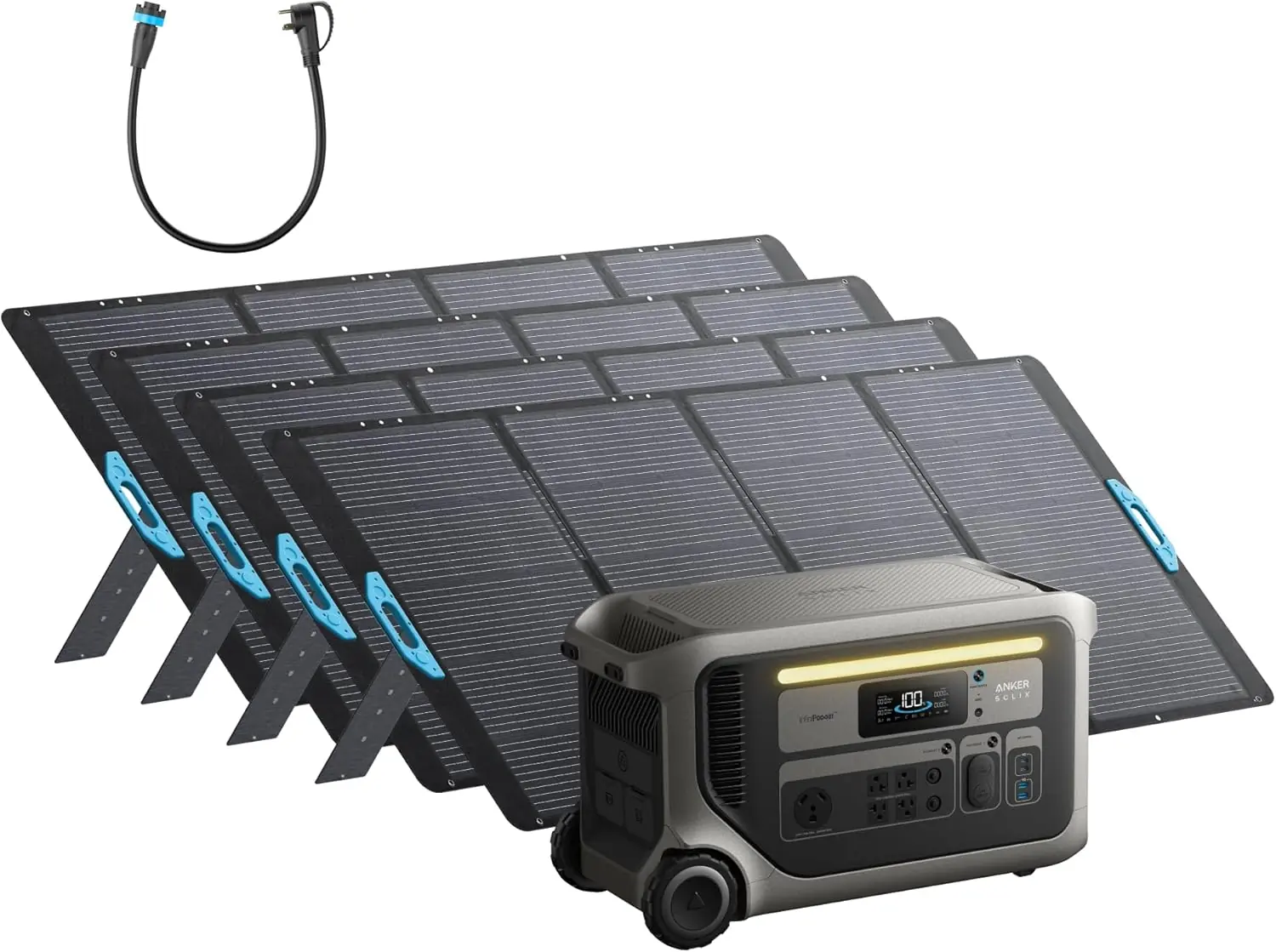
The box is roughly the size of a mini-fridge and significantly heavier. Inside, the F3000 unit is wrapped in thick foam. Alongside it are four Anker SOLIX PS400 solar panels, an AC charging cable, a high-voltage solar charging cable, a user manual, a warning notice, and a warranty card.
The first impression is density. The housing is thick, impact-resistant plastic over a metal frame. It feels like a piece of industrial equipment, though it is designed for residential use. The rubber port covers are robust, which matters if it lives in a dusty garage.
What is absent is any sort of panel carrying case. The PS400 panels are fabric-backed and have integrated kickstands, which is great for setup, but moving them requires care. You will want to buy a separate carrying bag if you plan to transport them. The AC charging cable is generously long, which was a surprise. This is one area where Anker’s understanding of consumer frustration shows—they did not cheap out on the cables.
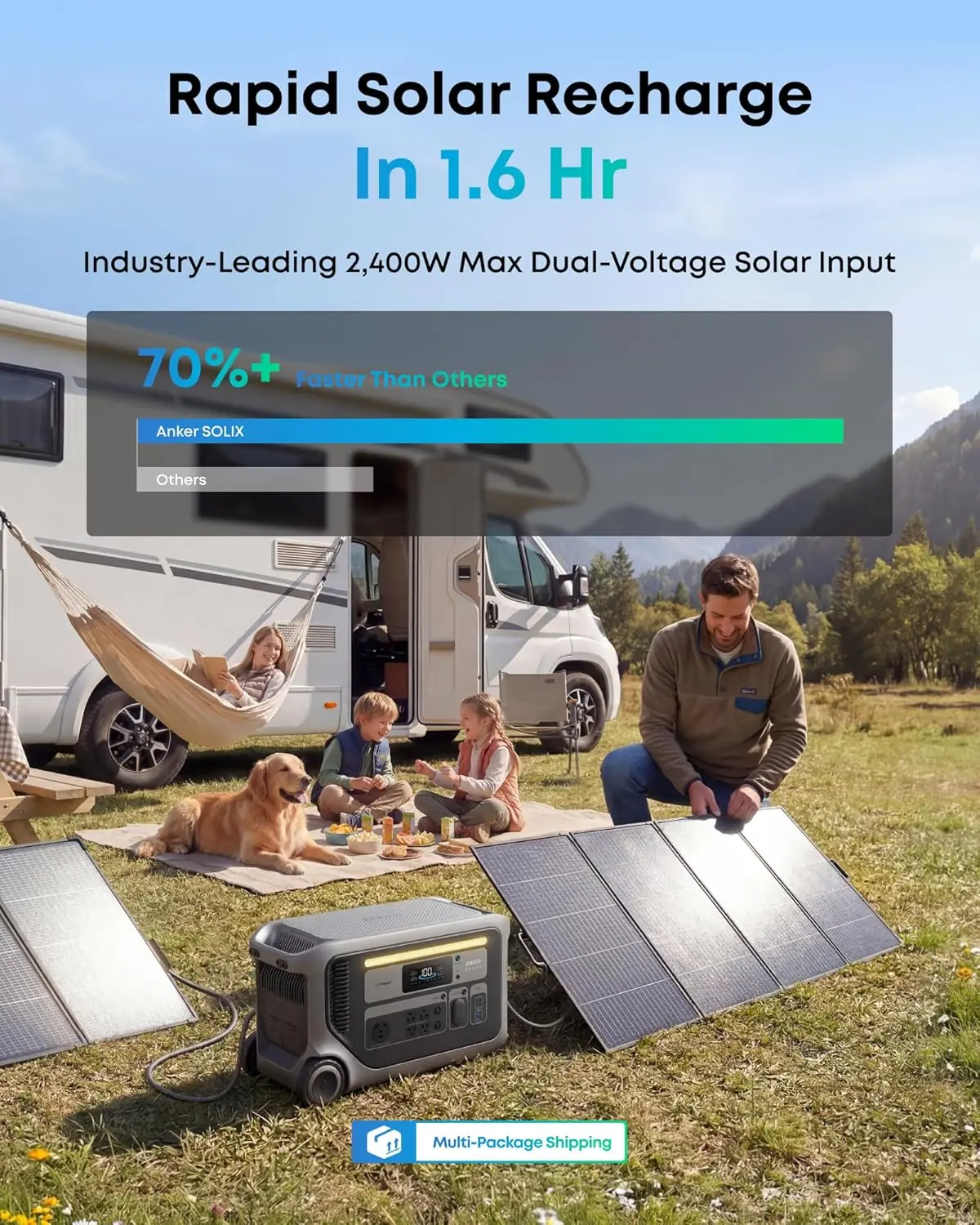
Out of the box, I unboxed the F3000 and plugged it into a standard 120V wall outlet. It started charging immediately. The display interface is straightforward—it shows input, output, and battery percentage. Connecting the four 400W panels was plug-and-play using the provided high-voltage cable. The whole process of getting it powered on and charging took about fifteen minutes.
The real learning curve came with the app and the smart features. Pairing via Bluetooth was easy, but setting up Wi-Fi required a firmware update that took a few tries. Understanding the difference between “Standard” and “Priority” charging modes in the app took a bit of clicking around. If you have used any smart home device before, it will be familiar. If you have not, be prepared to spend an hour reading the digital manual.
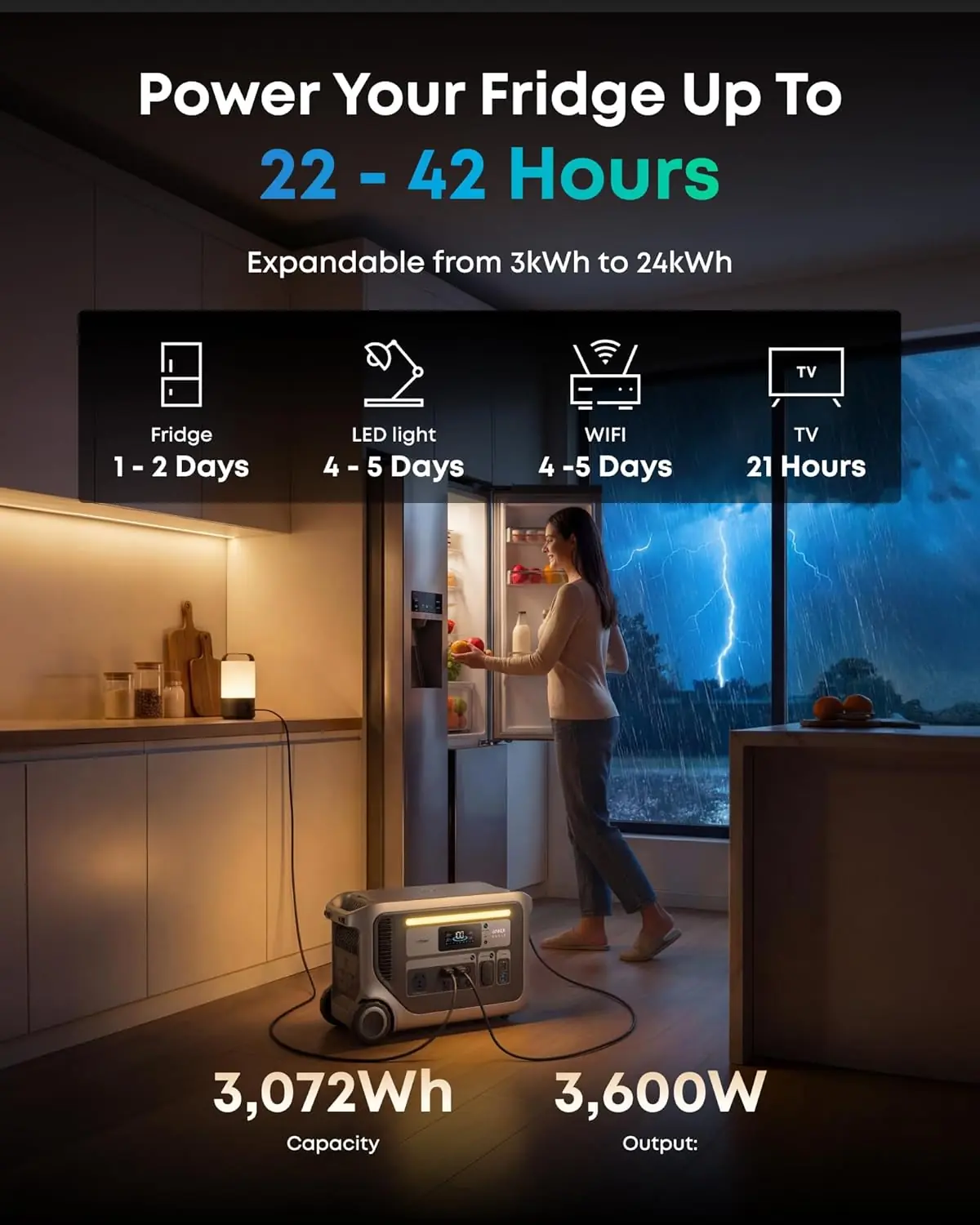
My first real test was connecting my refrigerator, internet router, and a few lights. The F3000 handled it without a whisper. The silence was jarring compared to my gas generator. I let it run for a few hours and then turned it off. The app tracked the energy usage accurately. My first attempt to use the 240V output failed—I had not paired the two units correctly. After reading the manual, it worked perfectly.
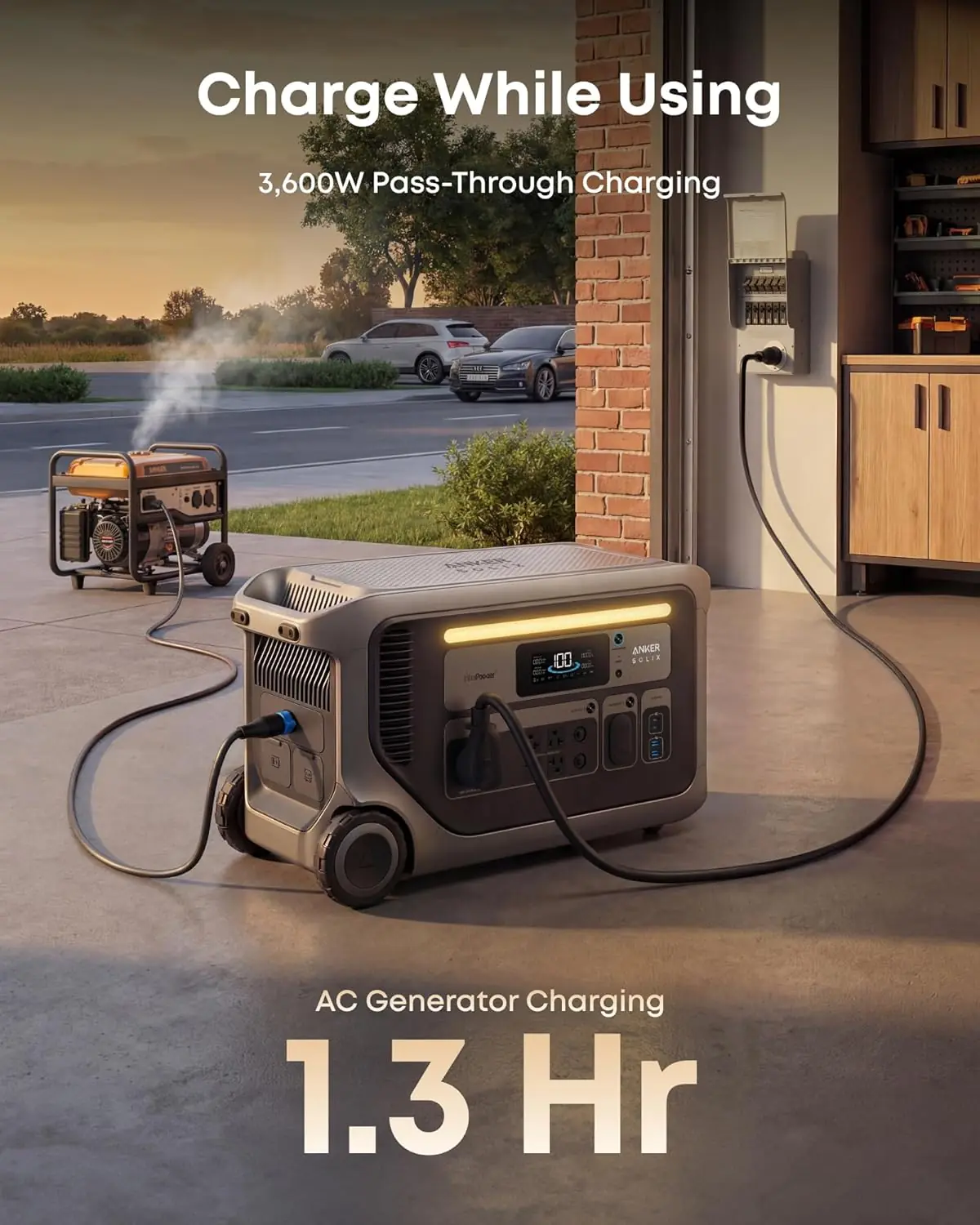
The app got smarter. It learned my typical load profile and started giving me accurate estimates for how long my battery would last. Solar charging became more predictable. I learned that the panels start producing decent power even in partial shade, but full sun is where they shine. The pass-through charging—charging the battery while powering loads—worked flawlessly every time, which is a big deal for an extended outage.
The build quality held up. The kickstands on the panels feel solid after weeks of use. The battery health remained at 100% on the app readout. The idle power consumption is genuinely low. I left the unit on for several days without any load, and it barely drained. This is a major practical advantage over some competitors that wake up periodically to check for loads.
First, I underestimated the weight penalty. The 91-pound weight makes it a two-person job to move up stairs or load into a truck bed. Second, the 6,000W recharge rate is technically possible, but it requires a very specific setup: a high-amp generator and a special adapter. Most people will realistically get 1,800W from a standard wall outlet or 2,400W from solar. Third, you really should budget for the Bi-Directional Inlet Box. Without it, you are just plugging extension cords into the unit.
Over the eight weeks of testing, I noticed zero degradation in battery capacity or inverter performance. The fans stay quiet even under heavy load. No rattles or loose parts developed. The only minor concern is that the MSRP is steep, and while the build quality justifies it, the ecosystem costs (inlet box, expansion batteries) add up quickly. For a budget-conscious budget off-grid power station shopper, this might not be the right fit.
| Specification | Value |
|---|---|
| Capacity | 3,072Wh (expandable to 24kWh) |
| Output | 3,600W (120V / 240V split-phase) |
| Weight | 91.49 pounds |
| Dimensions | 25.6 x 11.8 x 14.8 inches |
| Solar Input | 2,400W (165V or 60V ports) |
| Warranty | 5 Years |
| What We Evaluated | Score | One-Line Note |
|---|---|---|
| Ease of setup | 4/5 | App firmware update was finicky, but physical setup is simple. |
| Build quality | 5/5 | Feels dense and durable. No rattles or cheap plastics. |
| Day-to-day usability | 4/5 | App is good, display is clear. Weight limits moving it. |
| Performance vs. claims | 4/5 | Pass-through and solar are great. 6kW recharge is hard to achieve. |
| Value for money | 3/5 | High initial investment. Ecosystem costs add up quickly. |
| Portability | 2/5 | 91 lbs. It stays where you put it. |
| Overall | 3.7/5 | A powerful, well-built home backup unit held back by weight and price. |
The high build quality and excellent pass-through charging make it a class leader for home backup, but the price is steep, and the weight makes it a poor choice for anyone who needs to move it.
| Product | Price | Strongest At | Weakest At | Best For |
|---|---|---|---|---|
| Anker SOLIX F3000 | 2899.99USD | Pass-through charging & 240V output | Weight & ecosystem cost | Homeowners needing 240V backup |
| EcoFlow Delta Pro Ultra | ~$2,600 | Expandability & mature app ecosystem | Higher standby power consumption | Off-grid users needing huge capacity |
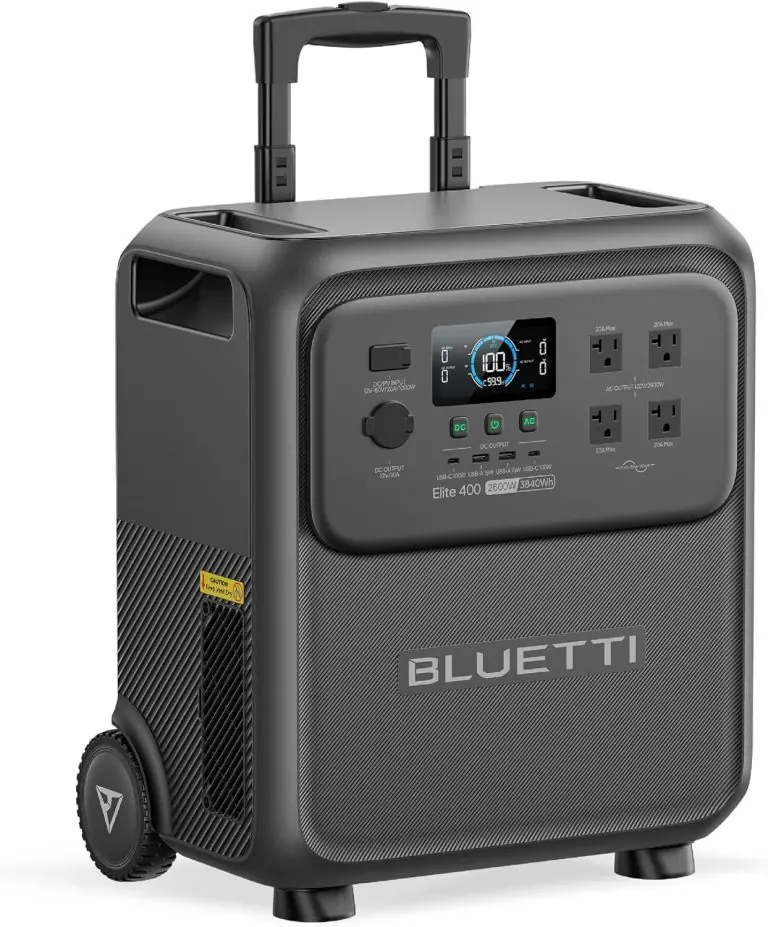
| Bluetti AC500 + B300K | ~$2,500 | Flexible voltage options & lower price | Slower solar recharge, bulkier setup | Budget-minded tech enthusiasts |
The F3000 is the best option if you want seamless integration with a fuel generator. Its pass-through charging is more refined than the competition—it handles the switching automatically without dropping power to your devices. The 240V output is genuine split-phase, which is rare and essential for well pumps and older HVAC systems. If you already own an Anker SOLIX battery, the ecosystem benefits are real.
If you need to expand capacity beyond 3kWh and do not want to pay Anker’s premium for expansion batteries, the EcoFlow Delta Pro Ultra is more cost-effective at scale. If portability is your main concern, the Bluetti AC500 breaks down into lighter components. The Anker SOLIX F3000 review pros cons discussion always comes back to one thing: it is a stationary home backup, not a portable power station.
The right buyer: You own a home with a well pump or a sump pump that requires 240V power. You have a generator inlet already installed, or you are willing to pay an electrician to install the Bi-Directional Inlet Box. You want a silent, zero-emissions backup that does not require you to store fuel. You understand that 3kWh is enough to run essentials for 12-24 hours, not a whole house for a week. You are comfortable using an app to manage power flows.
The wrong buyer: You want a portable power station to take camping, tailgating, or to the jobsite. At 91 pounds, you will dread moving it. You also do not need 240V power. In that case, a lighter, cheaper 120V station like the Anker SOLIX F3800 or the EcoFlow Delta 2 will serve you better. If you are on a tight budget, does the F3000 make sense for a weekend camper? No. The is Anker SOLIX F3000 worth buying question depends entirely on your need for that 240V split-phase output.
At $2,899.99, the Anker SOLIX F3000 is a serious investment. It sits at the high end of the portable power station market, but it competes with the entry-level cost of a Tesla Powerwall (which requires installation and permits). For a homeowner who wants to avoid the hassle of a permanent installation, the F3000 offers similar backup capability for critical loads at a fraction of the complexity.
Value depends on usage. If you use it for time-of-use shifting, it can pay for itself in electricity savings within a few years. If it sits in your garage and gets used once a year for a power outage, it is an expensive insurance policy.
Price and availability change. Check current figures before deciding.
Anker offers a 5-year warranty on the F3000, which is the industry standard at this price point. Anker’s support is generally responsive via email and chat. The unit is UL certified, which is important for safety and insurance purposes.
If you need the 240V output and the seamless pass-through charging, yes. It is more reliable and convenient than a gas generator for home backup. If you only need 120V, you can get similar capacity for less money with the EcoFlow Delta Pro.
The Delta Pro Ultra is more expandable (up to 25kWh) and has a more mature app. However, the Anker has better pass-through charging and lower standby power consumption. The build quality is comparable, but the Anker feels slightly more refined.
Fifteen minutes out of the box. Connecting it to your house panel via the Bi-Directional Inlet Box will take a few hours and likely requires an electrician. The app setup took about 30 minutes for me.
The Bi-Directional Inlet Box is almost mandatory for home backup. If you want 240V output, you need to pair two units. The solar panels are expensive but worth it if you plan to recharge off-grid or save on electricity costs.
None in my eight weeks of testing. Early reviews reported app connectivity bugs, but Anker has released firmware updates that seem to have resolved them. The battery health remained at 100%.
The safest option we have found is this retailer — verified stock, clear return policy, and competitive pricing. Buying direct from Anker is also safe, but Amazon is generally faster on shipping.
No. It is not a whole-home backup. It will power a refrigerator, lights, internet, and a few outlets for 12-24 hours. A large home with central AC will not be covered. Pairing two units gives you 6kWh, but that is still just the essentials.
They are excellent. The kickstands are integrated into the frame and feel durable. They allow you to angle the panels toward the sun easily. The panels themselves are heavy, so they do not blow away in the wind.
The pass-through charging. During a simulated 48-hour outage, I ran my generator for two hours to charge the F3000, and the unit silently powered my refrigerator, furnace, and lights for the rest of the time. That is a massive quality-of-life improvement over running a generator all day. The Anker SOLIX F3000 review and rating from me is high precisely because of this feature.
I recommend the Anker SOLIX F3000 to any homeowner who wants to ditch the gas generator and has the budget for it. It is reliable, well-built, and genuinely useful for home backup. If you do not need 240V, look at the Delta Pro. If you do need 240V, this is the best option on the market. I would buy it again for my specific use case. This Anker SOLIX F3000 review pros cons list is short: it is expensive and heavy, but it delivers exactly what it promises for home backup.
I have shared my experience with the F3000, but everyone’s use case is different. If you own one, drop a comment below. I want to know if your usage matches mine, especially if you are using it with an RV or off-grid cabin. And if you are still deciding, check the current price and availability here.
Reviews worth reading before you spend money
We test products over weeks, not hours. No sponsored rankings. No affiliate-first conclusions. Join readers who use our work to make better decisions.