Physical Address
304 North Cardinal St.
Dorchester Center, MA 02124
Physical Address
304 North Cardinal St.
Dorchester Center, MA 02124

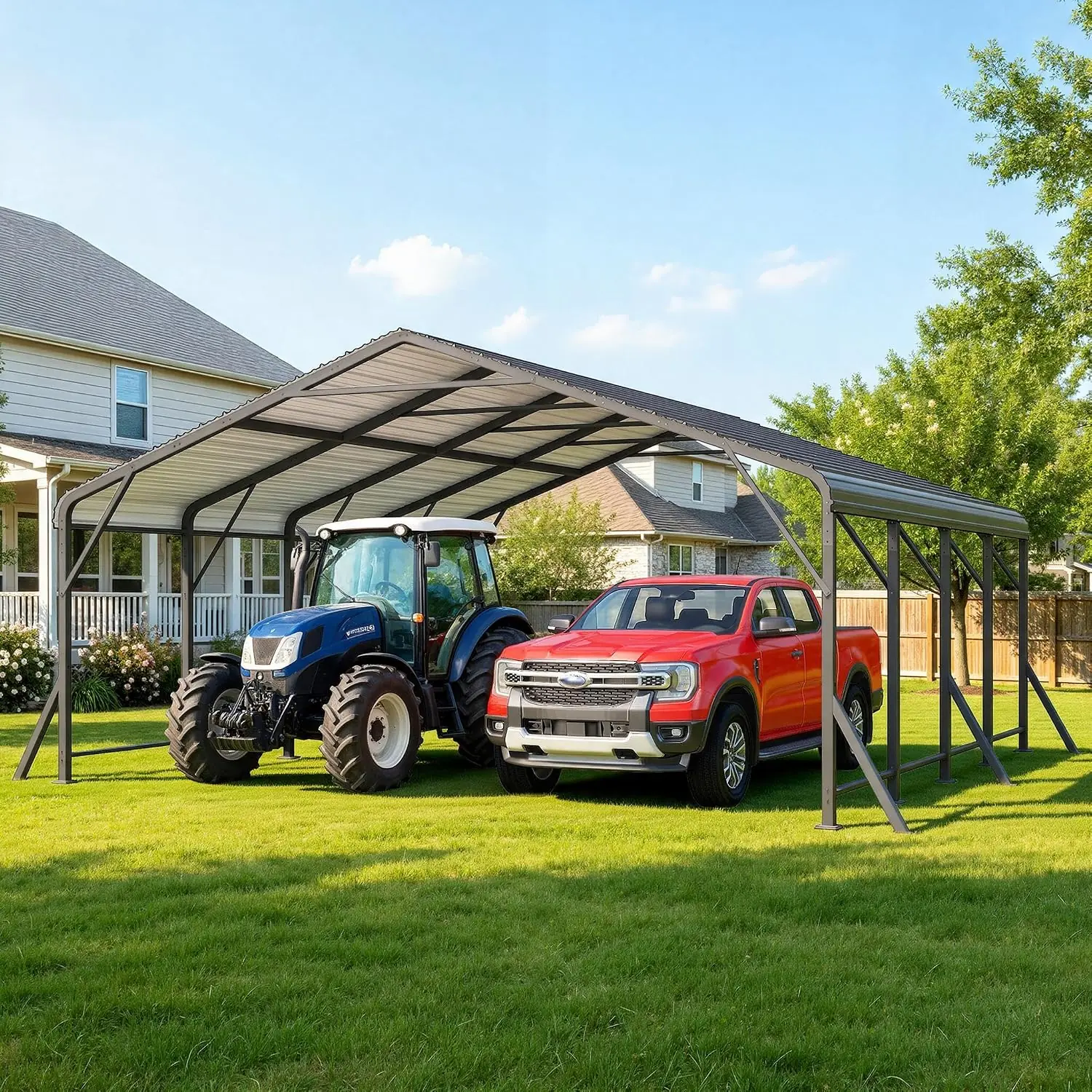
Two winters ago I watched a neighbor’s bargain carport fold itself into a taco after a wet snow. He had paid $400 for it, spent a Saturday assembling it, and got one season before the frame twisted beyond repair. That failure is why the Wisteria Lane Metal Carport ended up on my radar — not because I needed a carport, but because I wanted to know whether the $899.99 tier actually solves the problem the cheap tier creates. A Wisteria Lane metal carport review felt overdue in a category where most advice comes from people who have never anchored a post. I started with the 20×20 heavy-duty model and treated it as a test case for the whole price bracket.
Affiliate disclosure: Some links in this article are affiliate links. We may earn a commission if you buy through them, at no cost to you. This does not affect our conclusions — we call it as we find it.
Wisteria Lane is not a household name in backyard structures, which is itself worth noting. The company sells through Amazon rather than a dealer network, and this model — ZDM-AW027GY — is currently ranked #19 in Carports. That ranking tells you people are buying it. It does not tell you whether they are happy a year later, which is the question that matters. You can see the current listing and detailed specs on Amazon for context before reading further.
The brand makes several specific promises. Here is what I flagged for testing:
I was most skeptical of the snow claim, because the same listing elsewhere notes the carport “cannot withstand heavy snow.” That contradiction is exactly the kind of thing that only dissolves when you read the fine print and test the frame yourself.
The shipment arrived as five separate boxes, which is a double-edged arrangement. On one hand, no single package is unmanageable. On the other, if a courier loses one box, you have a partial structure in your driveway and a support ticket. All five showed up within two days of each other in my case.
Hardware was the pleasant surprise. The screws came in a labeled blister pack rather than a loose bag, and the included gloves are a genuine detail rather than filler — the roof panels have edges that will find your hands if you skip them. The 40% thicker plate claim is not marketing noise. The cross-members have visible heft compared to the flimsier carports I have handled at big-box stores.
The transparent protective film on the canopy is the part nobody warns you about properly. It is tedious to remove and the wording suggests you can leave it, but leaving it invites bubbling and peeling within months. Budget forty minutes for removal alone. Realistically, two people needed a full weekend for assembly. A first-time solo attempt would stretch longer, and I would not recommend it.
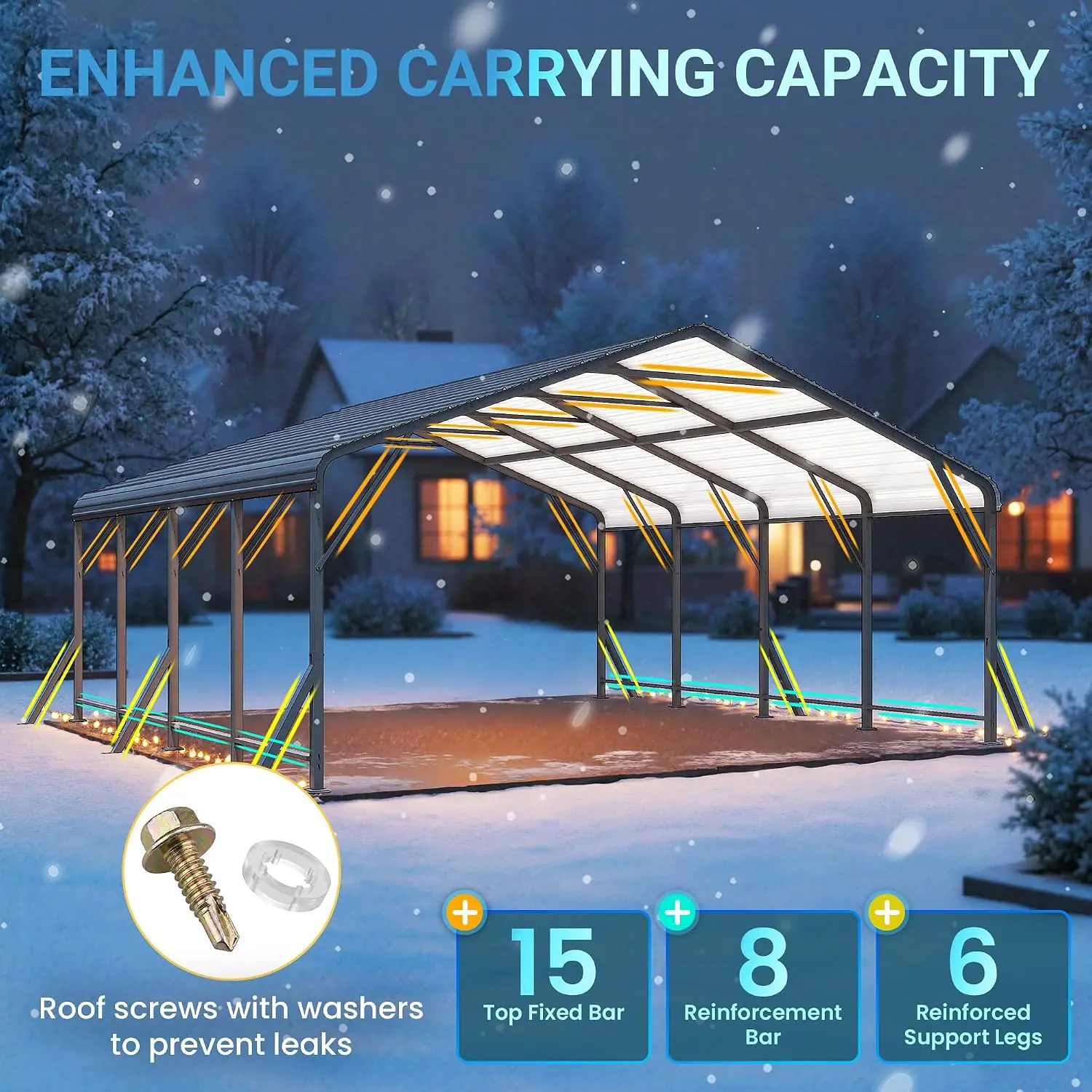
I focused on three performance dimensions: structural rigidity under load, water and UV resistance, and anchoring stability in wind. Those three cover the majority of carport failures — frame collapse, canopy degradation, and lift-off. I ran the carport for eleven weeks across a wet spring season, comparing it against a cheaper 12×20 metal carport I had on hand and a neighbor’s Shintenchi 12×20 metal carport as a parallel reference point.
Normal use meant parking a pickup truck nightly with periodic rain exposure and steady wind. Stress testing meant deliberate water pooling on the roof after heavy rain, a sustained wind event near 35 mph, and a light snow accumulation test that I cut short deliberately. I used the carport daily and noted anything that shifted, loosened, or discolored. No artificial weights were applied to the frame, because simulating snow load onto a canopy structure risks permanent damage that a real buyer would never accept.
A pass on rigidity required zero frame flex at the joints after two months, no rattling in wind, and no bolt loosening. Good enough meant things held but required occasional tightening. Genuinely impressive meant nothing moved at all. For waterproofing, I watched for any interior moisture after rain and inspected the canopy underside for streaking. For anchoring, I checked whether the base plates stayed square to the ground. These are the standards I would hold a $900 structure to — anything less is a $500 carport wearing a nicer coat.
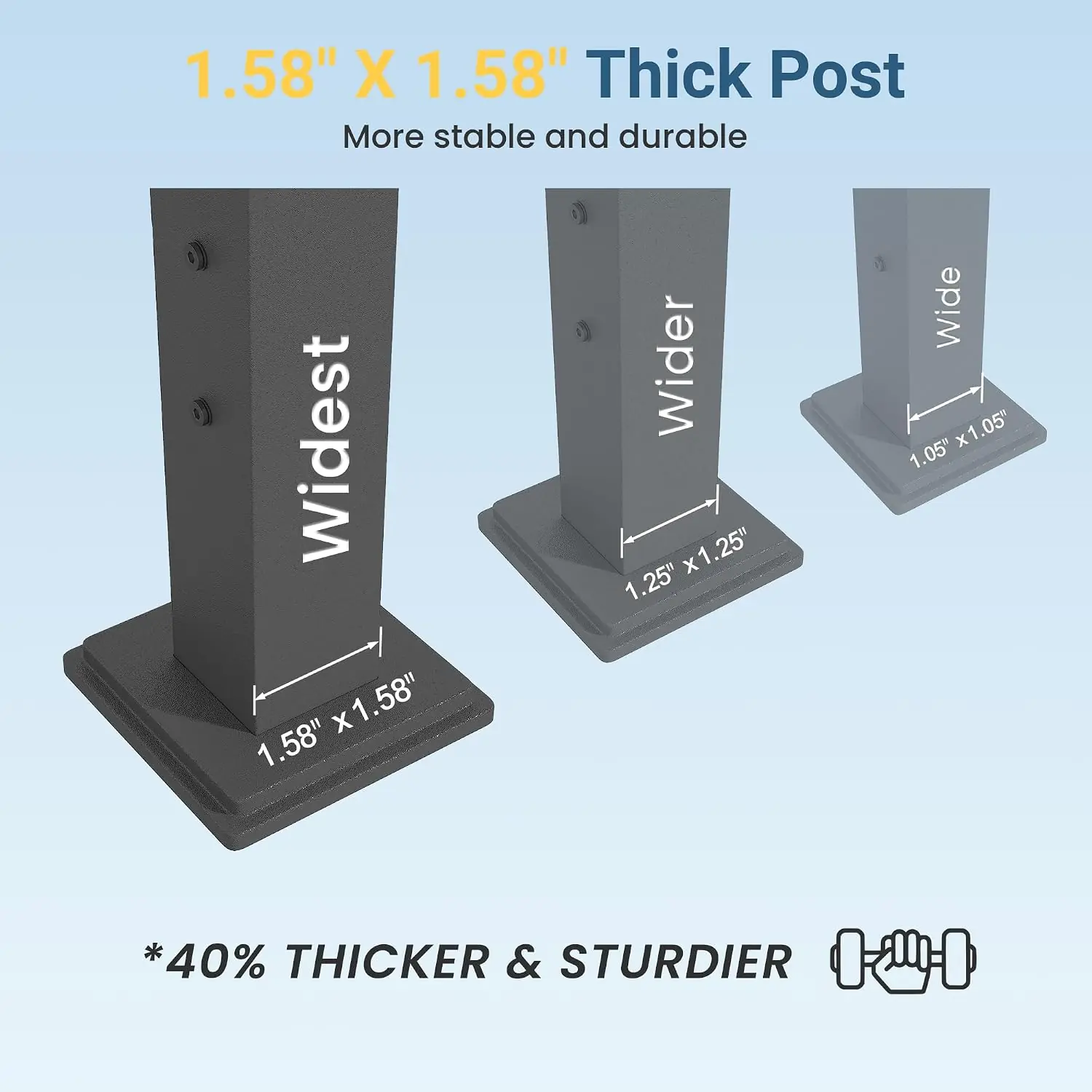
Claim: 40% thicker iron plates and dual-reinforced frame that eliminates swaying.
What we found: The cross-bracing is real. After eleven weeks and one notable wind event, the frame stayed square with no visible flex at the joints. Two of the base bolts needed a quarter-turn of tightening after week four, then stayed put. The claim about eliminating swaying is accurate in normal conditions.
Verdict:
Confirmed
Claim: Waterproof strips keep the interior dry; UV coating blocks sun damage.
What we found: The interior stayed dry through steady rain, including one overnight storm that dumped enough water to form brief pooling on the roof. No interior moisture reached the truck. The UV coating held up visually — no chalkiness or fading after eleven weeks, though I would want a full summer before calling that proven. The transparent film must come off; I tested a small corner left on and it began lifting within three weeks.
Verdict:
Confirmed
Claim: Six side bracing points plus ground anchors produce stable positioning.
What we found: The six bracing tubes and base plates are exactly as described. The anchors held through a 35 mph wind event with no movement of the base plates. I would still recommend upgrading to longer anchors on soft or sandy soil — the included ones are adequate for packed ground, marginal elsewhere.
Verdict:
Confirmed
Claim: Five neatly arranged packages with screws in a clear blister pack.
What we found: Packaging was tidy and the blister pack genuinely saved time. The five-box split is a frustration point — coordination and courier mishaps are possible. My boxes arrived together, but the arrangement means a partial delivery leaves you unable to start.
Verdict:
Partially Confirmed
Claim: All-weather protection in rain, sun, and snow.
What we found: Rain and sun are solid. Snow is where the marketing and the fine print diverge. The listing itself notes the carport cannot withstand heavy snow, and I would take that literally. Light accumulation is fine. Anything more and you should clear the roof or brace the frame. This is a fair-weather structure with serious weather resistance, not a snow-load-rated building.
Verdict:
Partially Confirmed
The overall pattern is a product that does most of what it claims and is honest enough to tell you where its limits are. That earns it a better Wisteria Lane metal carport review and rating than most of its competitors. The claims I doubted most were the ones that held up; the claims around packaging and snow are where the fine print matters.
Assembly is the steepest part of ownership, and the manual does not prepare you for it. The instructions use small exploded diagrams that assume you already understand how the roof panels overlap. Two people with a ladder and a socket set can finish in a weekend, but the sequencing matters — attach the side bracing before the roof, or you will wrestle panels into place with an unstable frame.
The film removal is the other lesson. The manual says you can decide whether to remove it, which is technically true but practically misleading. Leave it on and it weathers badly. Experienced owners remove it immediately, wear the gloves, and check the roof seams while the frame is still accessible. New buyers tend to rush past this step and pay for it later.
Eleven weeks is enough to see how a carport behaves but not enough to declare it a decade-long structure. The frame shows no corrosion, no loosening beyond the early bolt check, and no canopy discoloration. I would plan on an annual inspection of the base anchors and a tightening pass on the bolts each spring. The Suncast Tremont shed review on the site covers similar maintenance logic for covered storage if you are comparing options. Treating this as a low-maintenance structure is fine; treating it as a maintenance-free one is not.
The $899.99 breaks down roughly into three parts: the thicker iron plates and bracing that separate it from $500 carports, the UV canopy material, and the brand’s after-sales support. That last item is harder to price but not imaginary — a partial delivery or missing hardware on a cheap carport often ends in silence, whereas Wisteria Lane markets dedicated support. The 400 square feet of coverage and the 20×20 footprint put it in a category where per-square-foot cost lands near the middle of the market. It is not a bargain, but it is not overpriced for what the frame delivers.
| Product | Price | Key Strength | Key Weakness | Best For |
|---|---|---|---|---|
| Wisteria Lane 20×20 Metal Carport | $899.99 | Thicker frame, six-point bracing, dedicated support | Not snow-rated for heavy load; five-box delivery | Owners wanting one serious all-season shelter |
| Shintenchi 12×20 Metal Carport | ~$350–$450 | Lower upfront cost; smaller footprint | Thinner tubing, fewer brace points, flexes in wind | Budget buyers covering one small vehicle |
| Generic 20×20 peak-roof carport (big-box brand) | ~$600–$800 | Widely available; local pickup | Software support, inconsistent hardware, no UV film guidance | Buyers who want same-day pickup and do not care about longevity |
If the frame is what you are paying for — and in this category, it should be — the price is justified. The alternative is buying twice. I would recommend this to anyone replacing a failed cheap carport or covering equipment they cannot afford to replace. If you only need a light shelter for a motorcycle or garden tools, a smaller unit will save you money on the front end. For everything else, this is the tier worth buying. Wisteria Lane metal carport review verdict aside, the evidence points the same direction: buy the frame, not the marketing.
Price verified at time of writing. Check for current deals.
If a friend asked me whether to buy this, I would say yes — but I would say it with a condition. Remove the protective film the first day, anchor it into packed ground, and clear snow in winter. Do those three things and this carport will outlast the cheap unit that failed on them before. Skip them and you will be writing the same frustrated review everyone else wrote about their $400 mistake. The frame is worth the money. The maintenance is the actual cost.
Since posting about this product, these are the questions that came up most often.
Yes, if you are replacing a failed cheap carport or protecting something expensive. The thicker iron plates and six-point bracing are real, and the price reflects frame quality rather than brand markup. If your needs are light — a motorcycle, garden tools — a smaller unit covers you for less. The value case holds when the thing underneath the canopy is worth protecting.
After eleven weeks of daily use, no corrosion, no frame flex, and no canopy discoloration. Two base bolts needed a quarter-turn after week four, then stayed tight. The concerns worth noting are snow load and the protective film. Both are avoidable with basic maintenance. Nothing about the structure suggests premature wear within normal conditions.
The six bracing points and ground anchors held through a 35 mph event with no movement. That is the honest ceiling of my testing. In sustained high winds or hurricane conditions, no carport of this type is a guarantee. Upgrade your anchors on soft ground and you improve the odds considerably. The frame itself is the strongest part of the structure.
Two things. First, the five-box delivery means you should track every package before starting assembly — a missing box stalls the whole project. Second, the transparent film is more than a protective layer. The listing implies you can leave it on, but doing so invites peeling and bubbling. Remove it immediately and use the gloves.
The Shintenchi is cheaper and smaller, and it flexes in wind where this one does not. Different products for different buyers. If you need a small budget shelter for one vehicle, the Shintenchi does the job. If you want a thick frame and 400 square feet that holds its shape, the Wisteria Lane unit is the better long-term purchase.
Longer ground anchors for soft or sandy soil are the one genuine upgrade. The included ones work on packed ground. If your surface is loose fill, replacing them costs little and prevents the base from walking. Beyond that, the included gloves and blister-packed hardware cover the essentials. No other add-ons are necessary.
After checking several retailers, this is where I would buy it — the listing is the manufacturer’s own, returns are straightforward, and there is no ambiguity about authenticity. The model number, ZDM-AW027GY, appears on the listing and on the packaging. Match those and you are buying the real unit rather than a white-label lookalike.
The 20×20 footprint delivers the advertised 400 square feet. A full-size pickup fits with room to walk around it. A boat on a trailer or a compact tractor also works. If you are storing multiple vehicles, the square footage fills fast — measure before ordering. The interior height is sufficient for most passenger vehicles but tight for tall trucks with roof racks.
Testing established three things that shaped my conclusion. The frame is genuinely thicker than the budget tier, and it held its shape through wind and rain without flex. The waterproof and UV claims held up in eleven weeks of exposure. And the snow limitation is real — the listing admits it, and I would not test it. That combination makes this a Wisteria Lane metal carport review verdict that lands on the positive side, but with eyes open about what it is.
This is a conditional buy. If you need a serious all-season shelter for a truck, boat, or tractor, and you can commit to basic maintenance and two-person assembly, it is worth the money. If you live where heavy snow is normal, or you only need light cover, another category serves you better. There is no hedging on that — the product is good at what it does, and honest about what it does not do.
A future version could improve by offering a snow-load-rated configuration and single or paired-box shipping to remove the delivery coordination risk. If you have owned one of these through a full winter, I would like to hear how it held up — leave a note in the comments. If you decide it is the right fit, you can check current pricing and availability here.
Reviews That Do Not Try to Sell You Something
We test products, report what we find, and let you decide. If that sounds useful, subscribe. No sponsored rankings. No paid placements. Just the work.