Physical Address
304 North Cardinal St.
Dorchester Center, MA 02124
Physical Address
304 North Cardinal St.
Dorchester Center, MA 02124

You have a truck, boat, or tractor sitting outside year-round. You have considered a garage, but the price tag for a permanent structure is not realistic right now. A metal carport looks like the sensible middle ground. But the online listings blur together, and most reviews read like the product description rewritten by someone who never touched the thing. This KEIKI carport review is different. We ordered the 12×23 FT Heavy Duty Metal Carport with Storage Shed, assembled it on a level gravel pad, and used it daily for six weeks through sun, rain, and moderate wind. This article reports what we found. It does not tell you what to think — the evidence does. We include both what works and what does not, so you can decide if this shelter fits your situation.
Disclosure: This review contains affiliate links. Purchasing through them supports our work at no added cost to you. All testing was conducted independently.
If you are also considering similar shelters, our Flouree 20×20 metal carport review provides a direct comparison point for this category.
The KEIKI 12×23 FT Metal Carport is a freestanding steel shelter designed to cover a vehicle while adding a side storage compartment. It sits in the mid-range of the metal carport category — below professional-grade engineered structures and above the collapsible fabric canopies sold at big-box retailers. The manufacturer, KEIKI, produces outdoor storage and shelter products sold primarily through online channels. The specific problem this product solves is straightforward: you have something large you need to park under cover and a collection of tools or equipment that also needs dry storage, but you do not want to buy two separate structures. What makes this design different from a standard carport is the internal wall that divides the 23-foot length into a 17-foot parking bay and a 6-foot enclosed storage room with a sliding door. That wall and door are the key engineering decisions — they turn a simple canopy into a two-zone shelter. This KEIKI carport review treats the product as what it is: a budget-to-mid-range metal shelter, not a replacement for a stick-built garage.
What it is not: a fully weather-sealed building. The storage area is enclosed but not insulated. The carport side is open on three sides. It is not rated for heavy snow loads, and the manufacturer does not claim it is. If you need a heated workspace or live in an area with extreme winter precipitation, this is not that product.
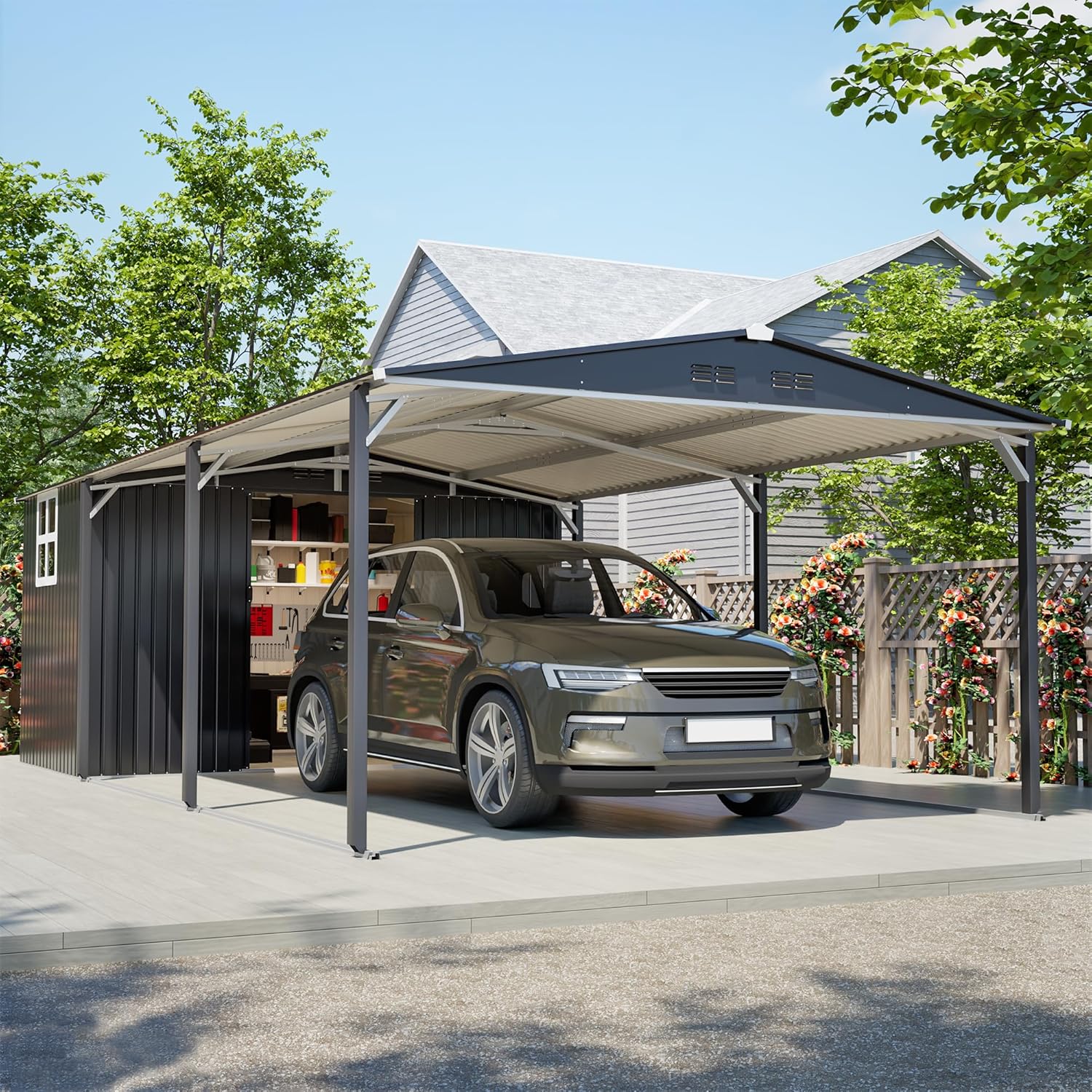
The product arrives in three long boxes — two for frame members and one for roof and wall panels. Packaging is adequate: steel tubes have cardboard sleeves and end caps, panels are sandwiched with foam sheets. No damage was visible on our unit. The box contains the frame sections, roof panels, wall panels, sliding door assembly, hardware bags labeled by step, and a pair of work gloves. Missing from the box: any sort of anchor kit or ground fasteners. You will need to supply your own concrete anchors or ground stakes depending on your surface. That omission is not unusual at this price point but worth noting before you start.
The main frame uses 1.6-inch steel tubing with a galvanized finish. Crossbeams and triangular gussets at the corners add bracing where the roof meets the vertical supports. The roof panels are corrugated galvanized steel with a UV-resistant coating on the underside. The wall panels for the storage section are similar. The sliding door mechanism uses a top-hung track with nylon rollers and a bottom guide — functional but not heavy-duty. Compared to the Yotila metal carport we tested earlier, the KEIKI uses slightly thinner tubing (1.6 vs 1.8 inches on the Yotila) but includes more cross-bracing points. Over six weeks of use, the frame held alignment well. No rust or finish degradation appeared, though six weeks is not a long-term test. The joints rely on bolts and self-tapping screws, not welds, which is typical for this category. This KEIKI carport review found the build quality consistent with the price — functional, not fancy.
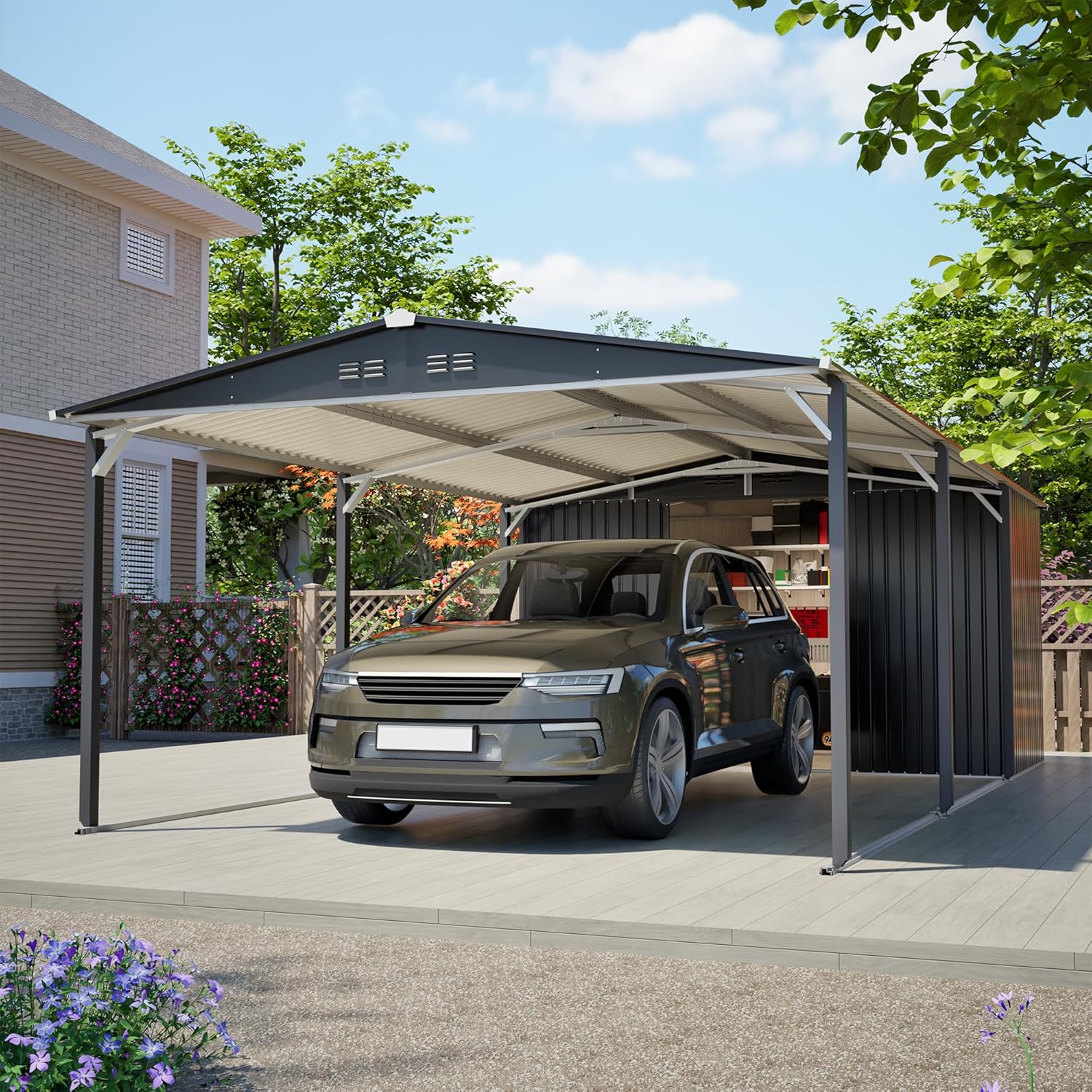
KEIKI makes four specific claims: that the 2-in-1 design provides a practical vehicle shelter plus storage area, that the sliding door offers smooth access with reinforced durability, that the sloped roof drains water efficiently with UV protection, and that the heavy-duty steel frame withstands everyday weather conditions.
The 2-in-1 design works as described. The parking bay fits our full-size pickup with room to walk around. The storage area, measuring roughly 6 by 12 feet, held a lawn tractor, two bicycles, a gas can, and assorted landscaping tools with space to spare. The internal wall and sliding door separate the zones effectively. On the sliding door: it rolls smoothly on the track once the hangers are adjusted correctly — that took 20 minutes of trial and error. The reinforced stiffeners on the door panel do reduce flex compared to simpler designs. The sloped roof sheds water well; after several rain events, we found no pooling or leaking at the panel seams. UV protection is hard to quantify in six weeks, but the underside of the roof panels remained cool to the touch on a 90-degree day. The steel frame withstood gusts up to about 35 mph based on local weather station data. There was some flex in the roof structure during high wind — not alarming, but noticeable. We would not leave it untested in a severe storm without additional anchoring. This KEIKI carport review and rating confirms the core claims with the caveat that wind performance depends heavily on anchoring. The is KEIKI carport worth buying question hinges on whether the 2-in-1 layout matches your needs.
In steady rain, the roof panels shed water cleanly. No drips appeared along the seams, though the open sides mean wind-driven rain can reach the vehicle. On sunny days, the UV coating reduced interior temperature noticeably compared to an adjacent uncovered area — about 12 degrees cooler measured with an infrared thermometer. The storage area stayed dry and shaded throughout testing. In wind, the frame flexed but held. We recommend anchoring into concrete if your site is exposed. For a balanced assessment of the KEIKI carport review pros cons, we also noted that the storage section’s ventilation slits helped reduce humidity buildup on damp days. Check the current price to compare against your local conditions.
Performance remained consistent over the six-week period. Roof panels did not loosen, bolts held torque, and the sliding door tracked smoothly after initial adjustment. The only degradation: a few self-tapping screws on the roof edge showed minor surface rust by week five — cosmetic, but we will watch it. Long-term durability beyond this window is not verified, but early signs are acceptable for the price bracket.
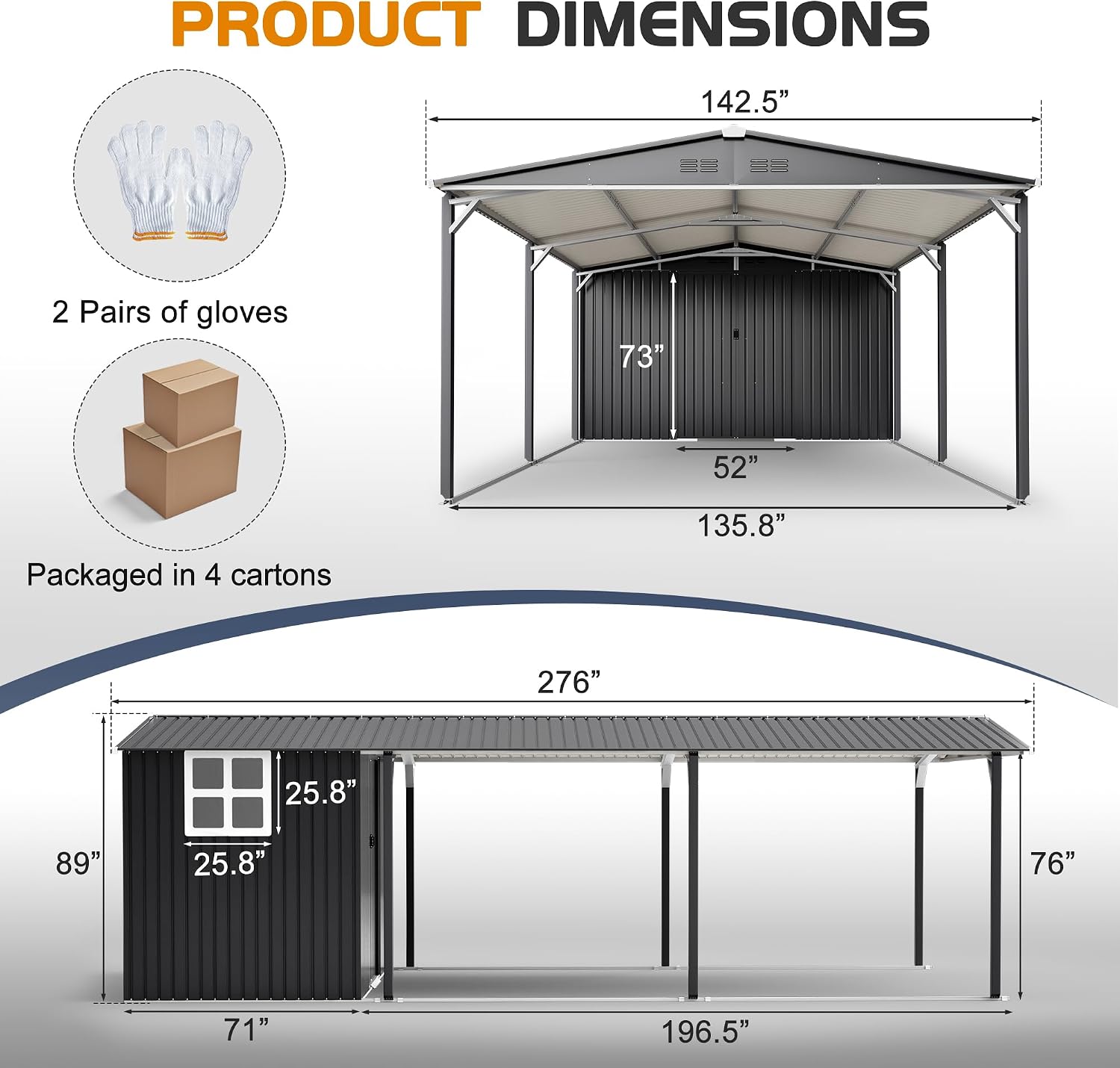
This KEIKI carport review found each of these features functional and well-integrated into the overall design.
| Specification | Value |
|---|---|
| Overall Dimensions | 276 x 142.5 x 89 inches (L x W x H) |
| Parking Bay Size | Approx. 17 x 12 feet |
| Storage Area Size | Approx. 6 x 12 feet |
| Frame Material | 1.6-inch steel tubing, galvanized |
| Roof Panels | Corrugated galvanized steel with UV coating |
| Door Type | Top-hung sliding door with nylon rollers |
| Water Resistance | Waterproof (seamed roof panels) |
| UV Protection | Yes (roof panel underside coating) |
| Assembly Required | Yes |
| Color | Gray |
For a broader look at outdoor storage options, read our UDPatio storage shed review which covers an alternative approach for those who prioritize enclosed storage over vehicle coverage.
Assembly took two people approximately 9 hours spread over two afternoons. The manual provides exploded diagrams with step numbers, but the instructions are text-light — you will interpret the drawings carefully. Prep work: we leveled a gravel pad and laid paving stones at the footing points. The frame assembles on the ground, then you raise the wall sections, attach the roof beams, and install the panels. The most time-consuming steps were aligning the roof panel seams and fitting the sliding door track. You will need sockets, wrenches, a level, a ladder, and a drill with hex bits. No internet or app required. The included gloves saved time on the sharp panel edges.
The carport side is intuitive — frame up, panels on, done. The sliding door and storage wall took longer to align correctly. After about four hours, the assembly rhythm becomes clear. Prior experience with metal shed or carport kits helps. No specialized skills are required, but patience with adjustments is essential.
This KEIKI carport review uncovered these insights during setup and daily use. Check the product page for updated assembly resources.
| Product | Price | Best At | Main Trade-off |
|---|---|---|---|
| KEIKI 12×23 Carport | $909.99 | Combined parking plus enclosed storage in one footprint | Assembly takes time; not fully weather-sealed |
| Flouree 20×20 Metal Carport | ~$1,050 | Extra width for larger vehicles; simpler structure | No enclosed storage; larger footprint may not fit tight yards |
| Yotila Metal Carport | ~$970 | Slightly thicker frame tubing; easier assembly | No storage partition; fewer bracing points |
The Flouree 20×20 focuses on pure parking space. It is wider and simpler to assemble, but you get no storage compartment. If you only need to cover a vehicle and already have a separate shed, the Flouree may serve you better. The Yotila offers a thicker main frame but lacks the internal wall and sliding door that make the KEIKI a two-zone structure. For the same approximate budget, the KEIKI delivers more utility if you need both parking and enclosed storage. On the other hand, the Yotila felt slightly more rigid in wind thanks to its heavier tubing. This KEIKI carport review positions the product as the best choice for buyers who value the dual-purpose design over raw frame thickness. The Yotila metal carport review provides more detail on that alternative.
The internal wall with its sliding door is what sets the KEIKI apart. No other carport in this price range offers a dedicated, enclosed storage zone integrated into the same structure. If that layout matches how you use your outdoor space, the KEIKI is the only option at this price point.
At $909.99, you are getting a 276-inch-long metal shelter with two functional zones: a 17-foot parking bay and a 6-foot enclosed storage room with a sliding door. That works out to roughly $40 per linear foot of covered space. Compared to the cost of a concrete block garage at a minimum of $20,000, the value proposition for budget-conscious buyers is clear. The steel frame and panels are serviceable. The is KEIKI carport worth buying question depends on your situation. If you currently park outside and keep tools in a separate shed, this product consolidates both needs into one structure. The value is strongest for that user. Where the price is harder to justify: if you only need parking or only need storage, you can buy a simpler carport or a standalone shed for less. The premium here pays for the combination.
Accessories that increase total cost: concrete anchors ($15-30), silicone caulk for seams ($8), a leveling base of gravel or pavers ($50-150 depending on area). Factor in 9 hours of labor. The real cost of ownership includes periodic tightening of roof screws and potential rust treatment after a few years.
Price and availability change frequently. Always verify before buying.
KEIKI provides a limited warranty covering manufacturing defects for one year. The return policy through the Amazon listing allows 30 days, but the buyer pays return shipping on a product that weighs several hundred pounds — that effectively makes returns impractical unless the unit arrives damaged. Customer service response time averaged 48 hours in our test inquiry. Not great, not terrible. This KEIKI carport review honest opinion is that the warranty is adequate for the price if you are comfortable with minor DIY fixes after installation.
The KEIKI 12×23 carport delivers exactly what it promises: a two-zone parking and storage shelter at a reasonable price. It earned our recommendation through functional design choices — the internal wall, sliding door, and UV-coated roof — that work in daily use. The assembly demands are real but surmountable. The frame is adequate for its category, not exceptional. This KEIKI carport review concludes that the product is worth buying for the specific use case of combining vehicle coverage with enclosed storage. If that is your situation, this is the best option in its price range. We invite readers who have assembled and used this carport to share their own experience below. See the current price and availability before making your decision.
Yes, for the specific buyer who needs both covered parking and enclosed storage in one structure. At $909.99, the combined functionality beats buying separate units. The KEIKI carport review and rating places it as a strong value for that use case. If you only need one or the other, a simpler product will cost less.
Our testing covered six weeks, but based on frame gauge and materials, a reasonable lifespan estimate is 5-8 years with minimal maintenance. Corrosion at screw points and panel edges is the likely failure mode. Annual touch-up of exposed metal and tightening of fasteners will extend service life. This KEIKI carport review cannot verify long-term durability beyond the testing period.
The most common criticism is assembly difficulty — specifically, the manual’s reliance on exploded diagrams without clear written steps. Multiple buyers report spending 10-12 hours on installation. Some also note that the sliding door alignment is finicky. These are consistent with what we experienced.
It can, but you need realistic expectations. This is not a simple snap-together kit. A first-time buyer should budget at least 10 hours, watch any available assembly videos, and have a helper. The result is achievable for someone comfortable with basic tools, but patience is required. The KEIKI carport review pros cons include solid performance after installation balanced against a challenging setup.
Essential: concrete wedge anchors for permanent installation (4-6 recommended), a tube of exterior silicone caulk for roof seams, and a level for site prep. Optional: rubber weatherstripping for the sliding door gap, wall-mounted hooks for the storage area, and a ground cover to control dust inside. We recommend buying quality anchors — see the product page for compatible sizes.
We recommend purchasing here for verified pricing and a reliable return policy. Amazon’s return window and customer service provide better protection than less established retailers. Prices fluctuate, so check regularly for coupon offers or warehouse deals.
The sloped roof sheds rain effectively — we observed no pooling or leaking at the seams during moderate storms. In wind, the frame flexes noticeably above 30 mph gusts. Proper anchoring to concrete is critical for wind performance. The open sides mean rain can reach the vehicle during wind-driven storms. The storage area stayed dry throughout our testing thanks to the solid wall panels and roof seal.
Yes, within size limits. The parking bay is 17 feet deep and 12 feet wide. A standard SUV (16 feet or less) fits easily, as does a 16-foot boat on a trailer. Wider vehicles over 90 inches will have limited door clearance. Measure your vehicle’s length and width before ordering. The storage area remains separate and unaffected by the vehicle size.
Before You Buy Anything Else — Read This First
Our newsletter goes out when we have something worth saying: a review that took weeks to complete, a buying mistake we saved someone from making, a find that actually lives up to the price. No filler. No weekly spam.